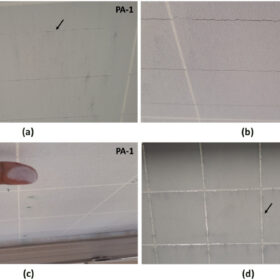
A closer look at backsheet degradation in desert enviromnents
A Qatari research group has analyzed the performance of polyethylene terephthalate backsheets in real outdoor testing conditions in desert areas and has identified the main causes that lead to degradation. These include prolonged exposure to high ultraviolet radiation, high operating temperature cycling, and relative humidity.

Rooftop PV systems explode in several parts of Beirut
A number of solar arrays were reportedly involved in a second wave of electronic-device explosions across Lebanon yesterday, resulting in numerous injuries and deaths. On Tuesday, an initial series of blasts triggered by pagers targeted members of the Hezbollah militant group, but also affected civilians.

Meyer Burger CEO resigns
Meyer Burger CEO Gunter Erfurt has resigned, with Franz Richter named as his successor. CFO Markus Nikles is also stepping down as part of the company’s restructuring, which includes job cuts, particularly in Europe.
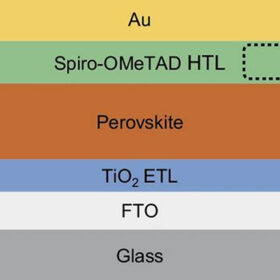
Perovskite solar cell based on lithium salt-doped spiro-OMeTAD achieves 25.45% efficiency
Researchers in China have proposed a new lithium-free doping strategy to fabricate spiro-OMeTAD-based hole transport layers (HTLs) for applications in perovskite solar cell. A PV device built with a salt-doped HTL achieved a record-breaking efficiency of 25.45%.

INA Solar breaks ground on 3 GW solar panel factory in India
Insolation Energy (INA Solar) is building a 3 GW PV module factory and aluminum frame plant in Rajasthan, India.

France’s Carbon reveals plans to acquire Photowatt
Carbon, a French PV module maker, has revealed plans to acquire panel manufacturer Photowatt, which is a unit of French energy giant EDF.

DYCM Power announces $800 million US solar cell, module factory
DYCM Power says it will build an $800 million solar cell and module factory in the United States, starting with 2 GW capacity and plans to expand to 6 GW.
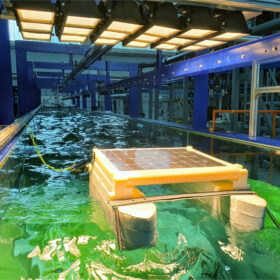
Scientists create setup to measure wave-induced power losses in floating PV
Researchers have measured the power loss of a 50 W panel stationed in a 30-meter wave tank. Based on ten different scenarios, they were able to draw an empirical equation for the prediction of power loss, with the highest loss being measured at 12.7%.
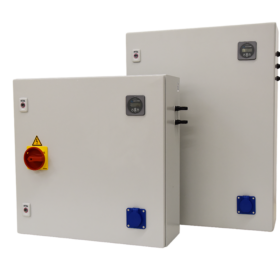
Solar cabinet for water disinfection systems
German fluid management company Lutz-Jesco introduced a system aimed at supporting pumping and water disinfection in cases of blackouts. The hub is preconfigured to work with solar panels, a battery charge controller, an inverter, and cabling.
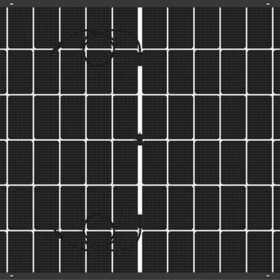
Sharp launches 450 W bifacial TOPCon module with 22.52% efficiency
Sharp’s new IEC61215- and IEC61730-certified solar panels have an operating temperature coefficient of -0.29% per C and a bifaciality factor of over 80%.
