
Fraunhofer ISE claims 31.6% efficiency for perovskite-silicon tandem solar cell
The German research institute said it utilized a hybrid manufacturing route to deposit the perovskite solar on the cell’s top PV device based on an industrially textured silicon heterojunction technology. For the bottom subcell, a standard silicon solar cell was used.
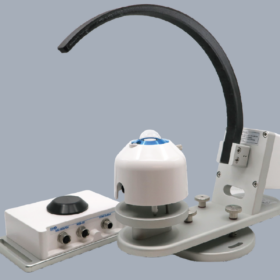
EKO unveils new solar monitoring solution
The latest irradiance sensor solution from Japan-based EKO Instruments provides continuous measurements in the field. Well-suited for bifacial PV systems, it supports the measurement of global horizontal irradiance, diffuse horizontal irradiance and direct normal irradiance, even in reflective and cloudy conditions.

Trina Solar presents ‘fully recyclable’ 645 W PV module with 20.7% efficiency
Trina Solar claims it has developed the world’s first “fully recyclable” 645 W PV module with 20.7% efficiency. It made the panel with interlayer separation reagents, chemical etching technology, and wet chemical silver extraction tech.

Maxeon challenges Nasdaq delisting threat, plans reverse stock split
Maxeon has challenged Nasdaq’s decision to potentially delist it from the Global Select Market and is now implementing a reverse stock split to raise its bid price above the required threshold. A hearing on the matter is pending.

Sharp unveils 610 W TOPCon solar panel with 22.58% efficiency
Sharp’s new IEC61215- and IEC61730-certified solar panels have an operating temperature coefficient of -0.29% per C and a bifaciality factor of over 80%.

PV-based molecular thermal energy storage system achieves 14.9% solar utilization efficiency
An international research term investigated the feasibility of converting solar energy into chemical energy with the design of a hybrid device featuring a solar energy storage and cooling layer integrated with a silicon-based solar cell. Under testing, the device recorded a record energy storage efficiency and decreased the cell’s surface temperature by approximately 8 C under standard solar irradiation conditions.
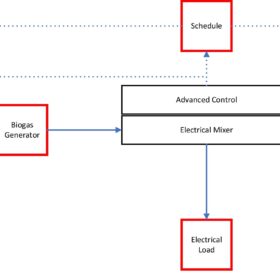
Offgrid hybrid PV-biogas system for residential applications
The system was conceived to respond to Lebanon’s energy crisis and help homeowners become independent from grid electricity. Biogas production is used when PV power generation is insufficient and machine learning techniques help the system predict solar energy production.

US solar industry standards for supply chain transparency
The Solar Energy Industries Association (SEIA) has submitted a draft industry standard to help companies comply with US Customs and Border Protection (CBP) traceability requirements for imports of solar components.

Italian scientists build 12.6%-efficient nickel oxide-based large-area perovskite solar modules
An Italian research group has fabricated 110 cm² perovskite solar module with an inverted configuration and a hole transport layer that uses nickel oxide instead of commonly utilized poly(triarylamine) (PTAA). The proposed architecture aims to achieve high efficiency that is competitive with PTAA-based panels while improving stability.
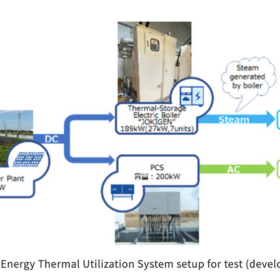
Storing surplus PV power with thermal storage electric boilers
Tokyo-based heavy industry manufacturer IHI Corporation has created a thermal utilization system that can convert surplus direct current power at solar plants into carbon-free steam. A test project that commenced in April has used all generated electricity and is operating stably, the company says.
