
Vertical PV comes to India
Yashika Energy Systems has partnered with Germany’s Next2Sun and Wattkraft India to launch pilot projects that integrate vertical bifacial solar technology with agriculture, ranging from 100 kWp to 500 kWp.

EU-funded project seeks set up pilot production of large-area perovskite PV modules
The EU-funded Laperitivo project aims for 22% efficiency in 900 cm² opaque perovskite modules and 20% efficiency in semi-transparent ones. The project partners include imec, Fraunhofer ISE, TotalEnergies, and EDF.

Chinese solar cell prices stable in a quiet market
In a new weekly update for pv magazine, OPIS, a Dow Jones company, provides a quick look at the main price trends in the global PV industry.
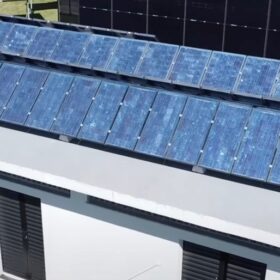
Circular economy and solar photovoltaics: is there a case for second-life PV modules?
What happens to a solar PV module after its expected 25-year operational life? With around 2 TW of rooftop and utility-scale PV already deployed worldwide, and a large number of them being retired before operating for 15 years, the amount of PV modules being discarded is growing every year. As PV modules are becoming cheaper by the day, and with the constant improvement in PV module efficiencies, many utility-scale PV power plants are starting to be repowered even before they reach their expected 25 years of operation. Many of these modules are still performing well. Can they be deployed for a second life to provide solar electricity for a few more years?

U.S. residential solar prices hovering near all-time low
Average home solar prices are $2.69 per watt, said EnergySage.
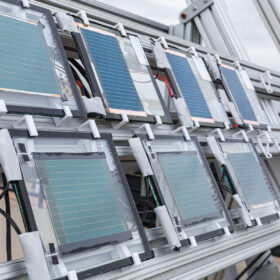
Thin-film tandem solar in the U.S.
Tandem solar-cell technology featuring silicon has been widely researched but materials such as perovskites, paired with established thin-film solar or with other perovskite cells, are pointing to a new development path.
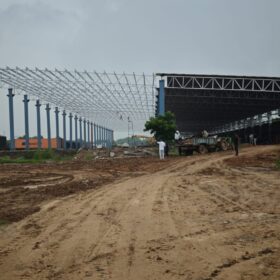
Gautam Solar to set up 2 GW solar cell factory
Gautam Solar says it will invest INR 10 billion ($119.6 million) in a 2 GW solar cell factory in India.
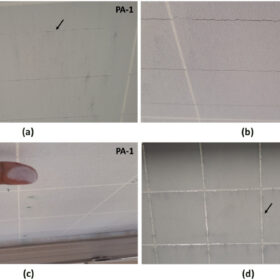
A closer look at backsheet degradation in desert enviromnents
A Qatari research group has analyzed the performance of polyethylene terephthalate backsheets in real outdoor testing conditions in desert areas and has identified the main causes that lead to degradation. These include prolonged exposure to high ultraviolet radiation, high operating temperature cycling, and relative humidity.

Rooftop PV systems explode in several parts of Beirut
A number of solar arrays were reportedly involved in a second wave of electronic-device explosions across Lebanon yesterday, resulting in numerous injuries and deaths. On Tuesday, an initial series of blasts triggered by pagers targeted members of the Hezbollah militant group, but also affected civilians.

Meyer Burger CEO resigns
Meyer Burger CEO Gunter Erfurt has resigned, with Franz Richter named as his successor. CFO Markus Nikles is also stepping down as part of the company’s restructuring, which includes job cuts, particularly in Europe.
