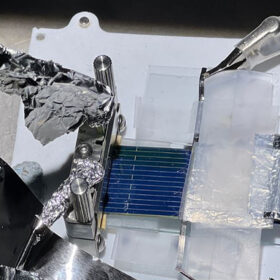
PV cell integrating molecular thermal storage tech achieves 14.9% solar utilization efficiency
Scientists in Sweden have integrated a PV device with a molecular solar thermal (MOST) energy storage system, which acts as as a solar cell optical filter and cooling agent. The proposed combination achieves a 0.2% higher PV efficiency and solar storage efficiency of 2.3%.
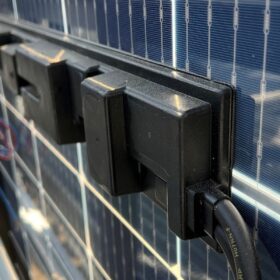
German researchers develop ‘communicative’ PV panels
A German research team is conducting practical tests to see how solar modules with integrated radio technology can be linked to form an overall network. The “communicative” panels should represent a simple and cost-effective solution for monitoring and controlling small-scale photovoltaic systems.
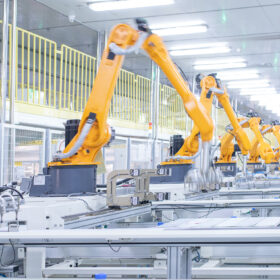
JinkoSolar-led group to build 10 GW solar cell, module factory in Saudi Arabia
A JinkoSolar-led consortium has announced plans to construct a 10 GW solar cell and module factory in Saudi Arabia with PIF and Vision Industries Company.

Energy management market to roughly double in Europe by 2030, says LCP Delta
New analysis from LCP Delta finds Germany is Europe’s top market for home energy management systems and predicts European yearly sales will more than double by the end of the decade.

Energielenker releases ‘self-learning’ energy management system
Germany-based Energielenker has developed a “self-learning” energy management system that controls energy flows in buildings with PV systems, using AI algorithms to analyze data from all relevant components.
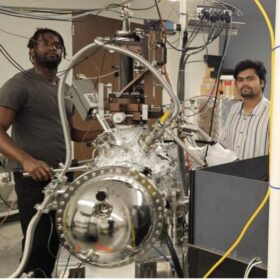
Organic solar cell gains counterintuitive efficiency boost from entropy
A research team at the University of Kansas have found that organic semiconductors known as non-fullerene acceptors demonstrate a high solar cell efficiency due to a reversed heat flow.
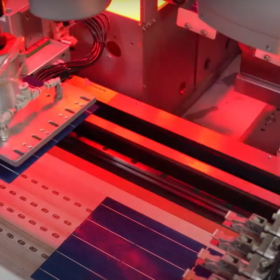
Indosolar starts production at 1.3 GW solar module factory
Indosolar, a subsidiary of Waaree Energies, has started production at its new 1.3 GW solar module manufacturing facility in India.
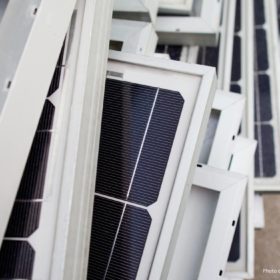
IEA-PVPS identifies 456 patents in PV module recycling
The IEA Photovoltaic Power Systems Programme’s (IEA-PVPS) latest report on solar panel recycling offers a comprehensive review of all existing technologies in this market segment, from pure mechanical recycling to innovative techniques such as as light pulse treatment, water-jet cleaning, pyrolysis, and chemical treatments.
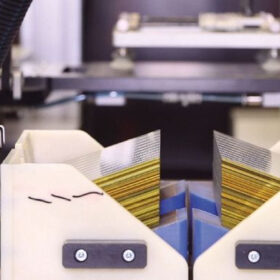
A gulf between PV ambition and testing facilities
Though it already hosts several of the world’s largest PV installations, the Middle East and North Africa (MENA) region’s solar industry is still young, with limited local infrastructure and expertise. Project developers are learning quickly that building PV in harsh desert environments requires a careful eye on quality. New testing laboratories are looking to meet demand.

Chinese PV Industry Brief: Beijing probes EU investment barriers for PV
The Chinese government is launching an investigation to determine whether the European Union is blocking Chinese solar investments.
