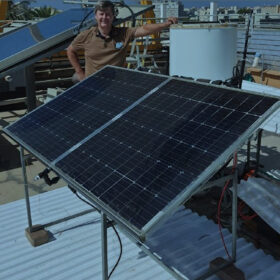
Israeli startup launches 530 W bifacial PVT panel
P.G. Solar Greener says that its new panels have a thermal capacity of 1,280 Wh. They can reportedly achieve an overall dual electrical efficiency of 26%, due to an embedded cooling technique.

Chinese PV Industry Brief: DAS Solar launches IPO
Chinese module maker DAS Solar says it aims to raise $351.7 million through an initial public offering (IPO). It will use the funds to expand its cell and module capacity.
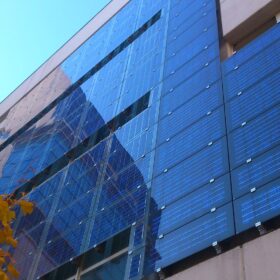
IEA-PVPS releases cross-sectional evaluation tool for BIPV
The market for building-integrated photovoltaics (BIPV) is evolving, necessitating the development of a comprehensive interdisciplinary evaluation methodology. IEA-PVPS Task 15 developed a cross-sectional evaluation tool, designed for architects, developers, and other stakeholders involved in BIPV projects. Through a step-by-step process, this methodology addresses economic, energy-relevant, environmental, and visual performance, providing a robust tool for comparing and optimizing BIPV installations.

Futurasun starts construction of 2 GW back contact module factory in China
The Italy-based solar module manufacturer said it is progressing with its previously announced transition from module manufacturer to a vertically integrated manufacturer with 12 GW of cell capacity. It also said the project to build a module factory in Italy is going through a “complicated process.”

Qcells signs big EPC, PV module deal with Microsoft
Qcells says it will supply 12 GW of modules, along with engineering, procurement, and construction (EPC) services, under a new eight-year agreement with Microsoft.

Auxin Solar files lawsuit against US government over Biden solar tariffs
Auxin Solar, a PV module manufacturer, has filed a lawsuit against the US Department of Commerce and US Customs and Border Protection (CBP) in relation to a pause on tariffs and alleged antidumping violations.

Solar helps Dutch team complete African overland adventure in electric Skoda
A Dutch team in a 4×4 electric Skoda journeyed across Africa powering part of the expedition with the solar panels they brought with them.
BEC-Energie Consult releases self-supporting PV mounting system
German developer BEC-Energie Consult has developed a mounting system that uses less material than conventional systems. It claims the new tech can reach 1.45 MW of output per hectare. It can also be used for ground-level agrivoltaic systems.
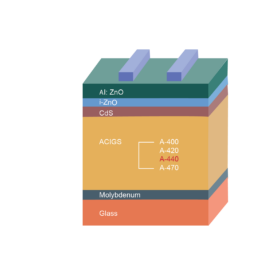
Silver-alloyed CIGS solar cell achieves 17.7% efficiency
Developed by scientists in Korea, the so-called ACIGS cell is intended for applications in perovskite-CIGS tandem PV devices. Their work demonstrates correlations between element diffusion behavior and notch-point formation in ACIGS films.
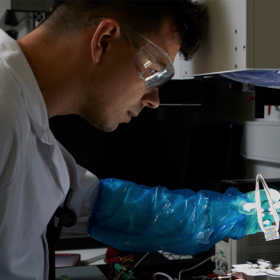
Breakthrough for producing perovskite solar cells with AI
Researchers at RMIT University’s School of Science, Monash University and Australia’s Commonwealth Scientific and Industrial Research Organisation (CSIRO) have harnessed artificial intelligence to accelerate the design and production of perovskite solar cells.
