
Brightspot Automation launches large-area PV photoluminescence testing tool
The U.S.-based metrology equipment manufacturer has launched a non-contact photoluminescent imaging system to reveal defects and other non-uniformities in silicon, thin film, and III-V multijunction PV devices.
Why AI matters for scaling perovskite solar modules
pv magazine spoke with Fan Bin, founder of GCL Optoelectronics, about how high-throughput experimentation and AI-driven optimization are accelerating perovskite development, and why stability, and not efficiency, remains the key challenge on the path to mass production
Silver-saving efforts ramping up in solar industry, says Heraeus
Rising silver prices are putting pressure on solar manufacturers, prompting greater focus on copper and other alternatives to reduce costs. Heraeus says it expects silver demand from photovoltaics to decline this year despite stable global installations.
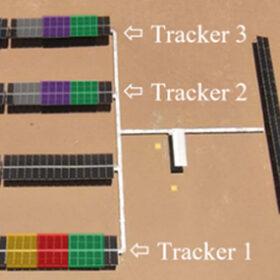
New algorithm reduces solar module temperature during clipping, curtailment
UNSW researchers have developed a thermal-aware tracking algorithm that reduces solar module temperatures and UV exposure during inverter clipping and curtailment, slowing degradation without lowering AC output. Tested in Chile’s Atacama Desert, the strategy was found to lower module temperatures by up to 7.7 C.
Chinese PV Industry Brief: CNMIA reports flat solar cell, module prices
The China Nonferrous Metals Industry Association (CNMIA) says wafer, cell and module prices remain stable, while industry operating rates are edging lower across leading and integrated manufacturers.
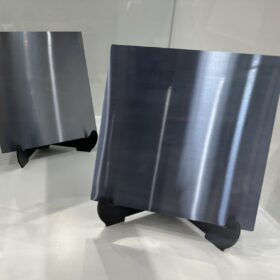
Longi builds 27.25%-efficient back-contact solar cells with high-resistivity wafers
High-resistivity silicon wafers offer superior efficiency potential but are highly sensitive to edge recombination and mechanical damage, limiting their commercial use compared to more robust standard wafers. Researchers from Longi and Sun Yat-sen University demonstrated that integrating in-situ edge passivation unlocks this potential, significantly boosting back-contact solar cell fill factor and efficiency.
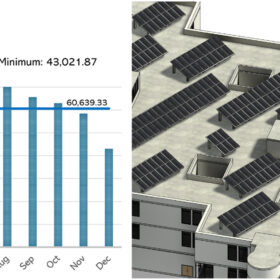
The impact of azimuth angles on PV power production in Saudi Arabia
Researchers in Saudi Arabia conducted a year-long simulation of fixed-tilt PV panels at different azimuth angles, finding that south-facing panels (180°) maximize energy production, while up to 45° eastward shifts cause minimal losses.

Polysilicon transactions remain subdued amid buyer hesitancy
In a new weekly update for pv magazine, OPIS, a Dow Jones company, provides a quick look at the main price trends in the global PV industry.

Fraunhofer ISE, PTB report just 0.15% uncertainty in PV module yield measurements
An interlaboratory comparison between the CalLab PV Modules of Fraunhofer Institute for Solar Energy Systems ISE and Physikalisch-Technische Bundesanstalt finds the two organizations deviate by less than 0.15% when measuring the performance of photovoltaic modules. The Fraunhofer team says this is one of the most important indications as to whether their analysis is on the right track.
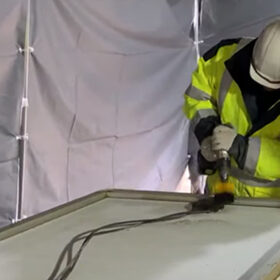
IEC-based technical specifications needed for second-life PV module market
The latest report from the International Energy Agency’s (IEA) Photovoltaic Power Systems Programme (PVPS) says second-life PV modules have the potential to reduce waste and extend the value of solar assets, but their market today remains underdeveloped and requires advances in technical qualifications, scalable reuse infrastructure and supportive policy frameworks.
