
Australia to earmark $10 billion fund to support clean energy manufacturing
Both houses of the Australian parliament have approved plans to establish an AUD 15 billion ($10 billion) national reconstruction fund to support domestic manufacturing in future industries and reduce the nation’s dependence on imports.

Tesla misses own expectations for Solar Roof deployments
Three years ago, Tesla said it expected to install 1,000 solar rooftop arrays per week, which would have amounted to 156,000 Solar Roofs in that time period. However, Wood Mackenzie reports that just 3,000 have been installed to date.
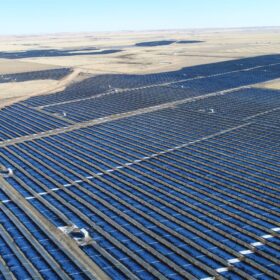
Canada formalizes 30% federal ITC credit, other incentives
Canada’s new policy plan mirrors the US Inflation Reduction Act (IRA), including two new input tax credits (ITCs) targeting clean energy and technology manufacturing that will remain at 30% through 2033, stepping down to 15% in 2034 before phasing out altogether after 2034.

China exported 29.6 GW of solar panels in January-February period
New figures from China’s General Administration of Customs show uninterrupted growth in global solar module demand. Chinese manufacturers exported 14.85 GW of panels in January and 14.82 GW in February.
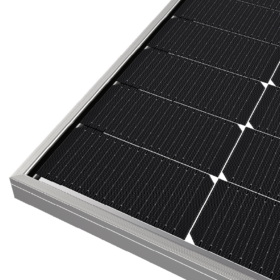
Case study demonstrates 5% energy yield boost for n-type TOPCon modules
Data collected from a 30 MW PV project in China’s Tianjin Province demonstrates that n-type tunnel oxide passivated contact (TOPCon) modules achieve a little more than 5% more energy yield than p-type PERC. Analysis by JinkoSolar, which supplied its TOPCon modules to the project, credits the n-type modules’ increased performance to a better temperature coefficient in the project’s hot climate, higher bifaciality and lower degradation.
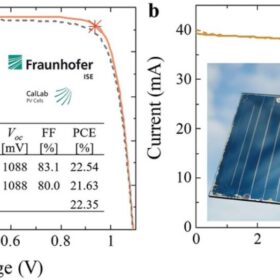
Slot-die coated perovskite PV cell with precursor ink hits 22.54% efficiency
German researchers claim to have reduced ribbing effects in using slot-die coating for the production of perovskite solar cells. The results are reportedly the most efficient solar cell built with this technique to date.

IRENA SolarCity Simulator to drive economic opportunities, improve healthcare
The International Renewable Energy Agency (IRENA) explains how to optimally use its SolarCity Simulator, an open-access platform designed to help member countries to deploy PV systems at the municipal level.
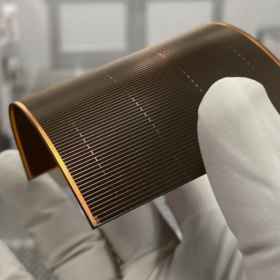
Ultra-thin solar cells self-repair damage from radiation in space
Arizona-based Solestial’s silicon-based solar cells exhibit a high level of resilience in space, according to third-party testing.
Indosol, Reliance win incentives for poly-to-module manufacturing
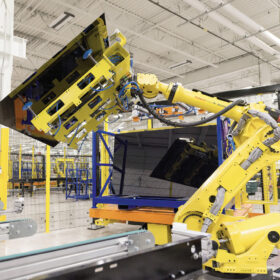
Eleven companies in India have emerged as the winners of the second round of the production-linked incentive scheme for high-efficiency solar modules. In particular, Indosol, Reliance, and First Solar have secured incentives for fully integrated production.

Trina Solar aims for 26% TOPCon solar cell efficiency by 2027
Zhang Yingbin, Trina Solar’s head of global product strategy, speaks to pv magazine about the path to a supply chain dominated by n-type TOPCon products. He says Trina Solar will reach 30 GW of TOPCon solar module capacity by the end of 2023.
