
Holosolis signs TOPCon patent licensing agreement with Trina Solar
HoloSolis is currently planning to open a 5 GW PV cell and panel factory in Hambach, France.
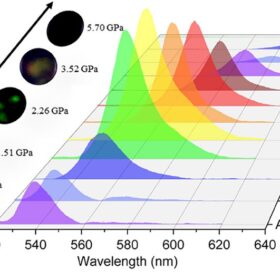
Finetuning 2D Dion-Jacobson perovskites for photovoltaic applications
Canadian and U.S. researchers have investigated applying pressure to a 2D hybrid organic-inorganic perovskite to tune the optical and electronic properties to suit photovoltaic applications, light emitting diodes or other semiconductor devices.
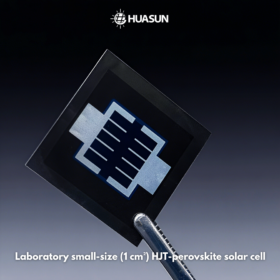
Huasun achieves 34.02% efficiency for perovskite-heterojunction solar cell
The Chinese manufacturer said the result was achieved thanks to new perovskite crystallization additives and high-mobility carrier transport layer materials.

Talon PV, Fraunhofer ISE set up pilot TOPCon solar cell production in Germany
The pilot production line will be deployed at Fraunhofer ISE’s Photovoltaic Technology Evaluation Center (PV-TEC) in Freiburg and will produce TOPCon solar cells in the G12 format.
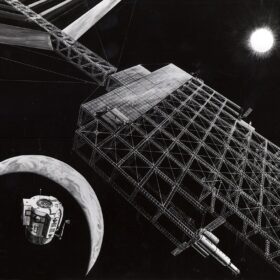
UK study finds space-based solar could supply 80% of Europe’s renewable energy needs
A paper by King’s College London scientists suggests that space-based solar panels (SBSP) could cut Europe’s land-based renewable energy needs by up to 80%, including reducing battery energy storage usage by more than 70%. The authors are now in contact with leading companies such as Space Solar.

Azerbaijan, Chinese PV firm plan export-focused solar factory in free zone
Azerbaijan and Chinese solar manufacturer Sichuan Sunsync have revealed plans to build a solar panel factory in the Alat Free Economic Zone, south of Baku.
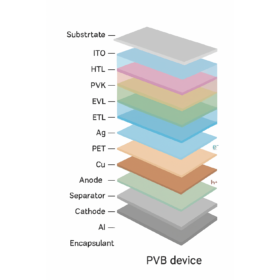
All-perovskite PV-powered battery for portable electronics
Scientists have used a dual-functional, material-sharing strategy with ethyl viologen diiodide to achieve synergistic performance enhancement in PV-powered batteries. The system was reportedly able to power a wearable glucose monitor for 24 hours.

How to measure solar cell vibrations in vehicle-integrated photovoltaics
Researchers at the University of Miyazaki in Japan used a new non-destructive method to enable them to investigate solar cell vibrations independently of module components. The study included potential design features for resonance-resistant vehicle integrated PV modules that would increase the natural resonance frequency to above 2,000 Hz.

Euronergy launches new lightweight PV module series
The Dutch company said the new products have a power output ranging from 410 W to 430 W in power and an efficiency of up to 22.2%. The panels reportedly weigh 30% less than conventional counterparts.

ESMC calls for solar extension to carbon border adjustment mechanism
The European Solar Manufacturing Council (ESMC) is encouraging the European Commission to include solar modules, mounting systems and solar trackers in the carbon border adjustment mechanism (CBAM). It says the extension would support Europe’s solar market as Chinese manufacturers that export finished solar products to the EU are currently exempt from costs imposed under the policy.
