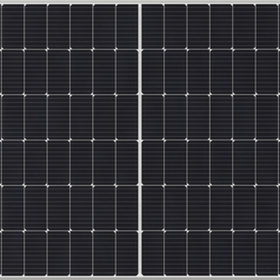
Sharp launches 540 W bifacial solar module
Sharp’s new IEC 61215 and IEC 61730-certified-certified panel features 144 half-cells based on M10 wafers and a 10-busbar design. Its operating temperature coefficient is -0.349% per degree Celsius and its power tolerance reaches up to 5%.
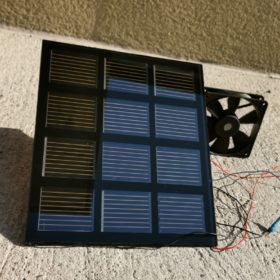
Titanium oxide nanoparticle-based perovskite PV cell with 24.05% efficiency
A new perovskite PV cell based on titanium dioxide nanoparticles exhibits low efficiency losses when scaled up from cell to module.
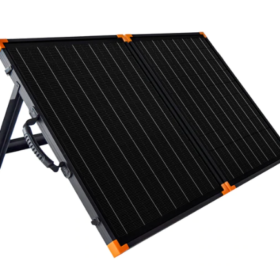
Solar briefcase packs in 200 W for off-grid, mobile living
FlexSolar has developed a foldable, portable PV briefcase kit with a charge controller and connection cables.
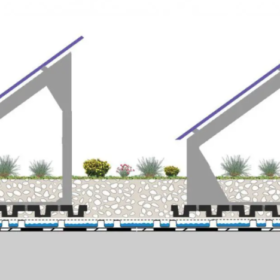
Novel PV system design for green rooftops from France
French startup Ecovégétal has developed a PV system configuration that uses vegetation to reduce the operating temperature of the modules. It says the presence of certain plants on a flat rooftop can even serve as a bulwark against the risk of fire.
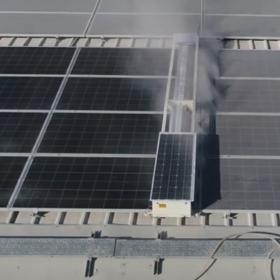
Self-powered, dry-cleaning robot for solar panels
Enray Solutions has developed an autonomous, water-free cleaning robot for ground-mount solar installations that draws its power from an on-board PV panel and battery. The robot is designed to withstand the harsh environmental conditions of all kinds of terrain.
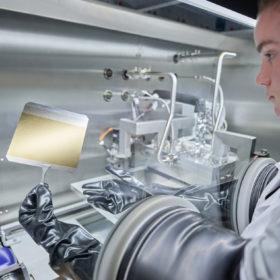
Atomic layer deposition tool for perovskite cell pilot line
Dutch equipment supplier SALD has announced delivery of a spatial atomic layer deposition system to an unnamed customer in the United States. The tool will be used in the pilot-scale production of perovskite solar cells. While it has not disclosed the exact function of the tool within the pilot project, it said it will be used to deposit thin coatings to protect cells from damage in later manufacturing stages, and ensure their longer-term stability.

Chinese PV Industry Brief: Longi, Zhonghuan raise wafer prices
A Chinese industry group has reported rising polysilicon prices and supply chain problems ahead, but GCL Technology said this week that strong polysilicon and wafer prices were the reason its business performed strongly in 2021.
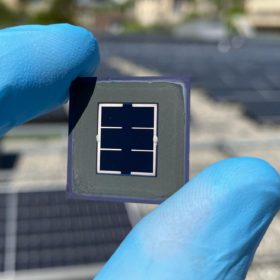
EPFL achieves 29.2% efficiency for tandem solar cell with fully textured silicon
Scientists in Switzerland made significant progress with an approach to perovskite-silicon tandem cell design that they say could eventually be integrated into existing silicon PV manufacturing. They have announced the achievement of a 29.2% cell efficiency – not far from the overall record for tandem cells, and verified by Germany’s Fraunhofer ISE.
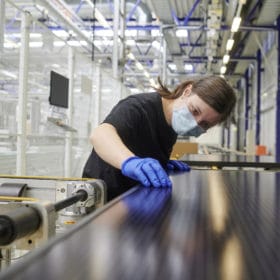
Meyer Burger to increase module, cell capacity in Germany
Swiss PV module manufacturer Meyer Burger has decided to achieve its capacity expansion targets by focusing on its German factories, in reaction to ongoing global logistics problems and supply chain issues.
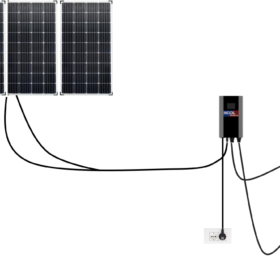
New PV water heater from Germany
German startup Nexol has developed a photovoltaic water heating system that relies on a smart controller, with either DC and AC power. It decides autonomously if grid electricity or PV is used, with the latter always preferred.
