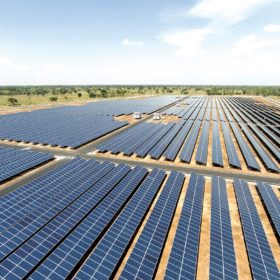
Reliance Industries’ new energy arm to acquire 40% stake in Sterling and Wilson Solar
The acquisition gives Reliance New Energy Solar access to Sterling and Wilson Solar’s PV plant engineering and project management skills as it aspires to become a global leader in green energy based on the latest and most cost-competitive technologies and development capabilities.
The weekend read: Half-cut solar cells on edge
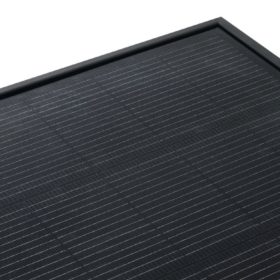
Half-cut solar cells have quickly grown to become an industry standard, promising more power through reduced cell-to-module losses, among other advantages. Innovative processes have been introduced to reduce cell damage during the actual cutting process, but even these still leave behind an unpassivated area at the edge of the cell, which can result in performance losses. As cell efficiencies increase, this will only become more of a problem. pv magazine examines the possible solutions.
Chinese PV Industry Brief: New solar glass production lines and a new big wafer deal
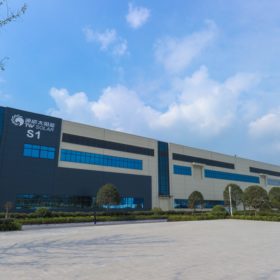
Luoyang Glass is planning to deploy two solar glass production lines with an annual capacity of 1,200 tons each and wafer maker Wuxi Shangji has secured a big supply agreement from Longsheng New Energy. Furthermore, Tongwei has reported increasing profits driven by its polysilicon business.
Maxeon refurbishes Mexican factory to set up 1.8 GW module manufacturing hub for US market
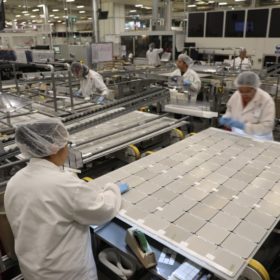
The Singapore-based manufacturer operates two factories in the Baja California state bordering the United States and the entire output of the facility in Mexicali will be shipped exclusively to the US market. Furthermore, the company’s chief revenue officer, Mark Babcock, told pv magazine that a manufacturing facility is also being considered in the US.
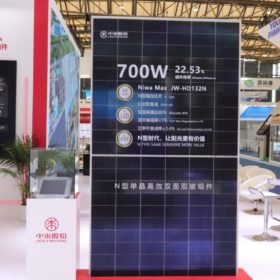
Jolywood unveils 700 W TOPCon PV module
The double-glass product has dimensions of 2,384 x 1,303 x 35 mm and a weight of 38 kg. It is based on the company’s n-type TOPCon 2.0 cell technology dubbed Niwa Max, which the manufacturer said reached efficiencies of up to 25.4% in the laboratory. The module’s efficiency ranges from 21.73 to 22.53%.
South Africa’s high court rejects legal action over content rules in 2 GW tech-neutral tender
The South African Department of Mineral Resources launched a tech-neutral procurement process for 2 GW of capacity in August 2020 in response to a chronic short-term electricity supply gap in the country.
Russian group starts building 1.3 GW solar factory in Kaliningrad
Unigreen Energy plans to open a 1.3 GW, vertically integrated factory in the Russian exclave of Kaliningrad on the Baltic Sea. Initially, the facility will have an annual module production capacity of around 500 MW.

Intersolar Europe day 3: Signing off!
Follow pv magazine live for the final day of Intersolar Europe 2021.
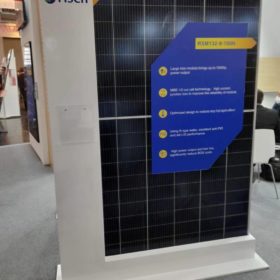
Risen showcases n-type solar panel with output of 700 W
The 210 mm module can reach a power output of up to 703.6 W and a power conversion efficiency of 23.08%. The result was confirmed by Germany’s TÜV SÜD.
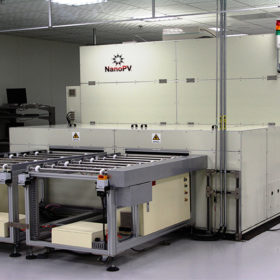
NanoPV to open US manufacturing plant
NanoPV Solar is investing $36 million in a facility to manufacture crystalline silicon and thin-film PV modules, in a move that will create around 500 new jobs.
