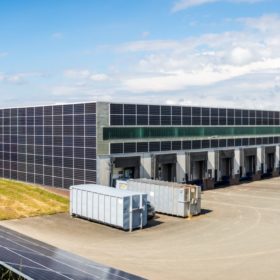
Heckert Solar inaugurates 400 MW solar panel factory in Germany
The German manufacturer invested €21 million in the manufacturing facility. It will be devoted to producing the company’s new product series.

Red BIPV solar module from Italy
The module is available with wattages of 230-245 W and can reach an efficiency of up to 13.45%. The panel is part of a new series of colored products that includes silver and orange modules.
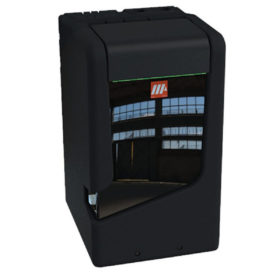
Residential PVT heat pump from the Netherlands
The propane-cooled 3.5 kW heat pump can be installed on both existing buildings and all-electric new buildings. It features a seasonal performance factor of 5.6 and is claimed to enable up to 80% of gas savings on heating and domestic hot water production.

How much glass is needed for terawatt-scale PV?
German scientists have assessed demand for resources such as glass and silver until 2100 and have found that current tech learning rates could be sufficient to avoid supply concerns.

Invisible BIPV system covers building in Zurich’s city center
The BIPV installation was developed with monocrystalline solar tiles provided by Swiss manufacturer 3S Solar Plus. The product is available in different gradations of green, blue, terracotta and brown and has a power output ranging from 80 to 170 W, depending on color and size.

Meyer Burger to open 400 MW solar module factory in US
Meyer Burger plans to open a U.S. factory with an initial production capacity of 400 MW per year, with the potential to scale it up to multiple gigawatts of capacity.

All-weather imaging tech to detect PV module faults
The system combines software that applies a modulated electric current to the PV panels and an indium-gallium-arsenide (InGaAs) photodiode detector that takes a sequence of images of the panels. According to its creators, the proposed technique works with any lighting conditions and in all weather.
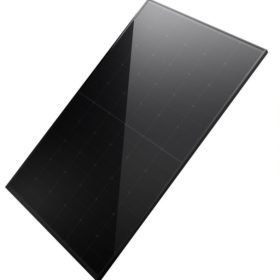
Longi announces 400 W solar panel with 22.2% efficiency
Conceived for rooftop applications, the module is also available in a full-black version with a power output of 390 W. It features a temperature coefficient is -0.29% per degree Celsius.

SEIA warns of US solar industry ‘death blow’ as Washington mulls tariffs
The Solar Energy Industries Association has criticized a group of U.S. companies for asking Washington to impose tariffs on PV imports from three Asian nations.
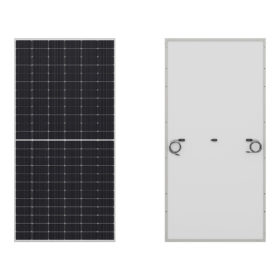
Sharp launches 540 W half-cut PV module with 20.9% efficiency
The IEC/EN61215 and IEC/EN61730-certified panel features 144 half-cells based on M10 wafers and a 10-busbar design. Its operating temperature coefficient is -0.341% per degree Celsius and its power tolerance reaches up to 5%.
