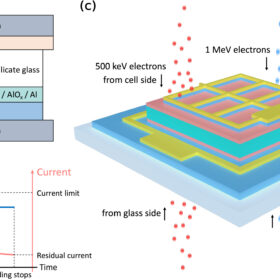
Gallium arsenide solar cells radiation-resilient for space applications
A group led by Cambridge University has developed an adhesive-free method of bonding ultra-thin gallium arsenide solar cells to borosilicate glass. The proposed technique is reportedly compatible with standard planar device processing.

Solitek launches anti-glare black bifacial solar modules
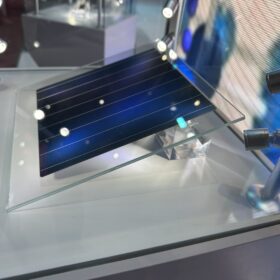
Lithuania’s Solitek has launched full-black 425 W bifacial solar modules with matte, satin-textured glass for glare-sensitive sites such as airports, road barriers, and buildings.
High-temperature co-annealing step could cut TOPCon cell costs
Researchers at the Ecole Polytechnique Fédérale de Lausanne (EPFL) have proposed combining the two high-temperature steps used in producing tunnel oxide passivated contact (TOPCon) solar cells into a single co-annealing process. Initial results show promising outcomes in boron concentration, passivation quality, and contact resistivity.
CEA recommendations for mitigating glass breakage
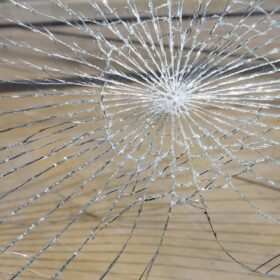
Solar modules are getting bigger, thinner, and more powerful. But from Texas to Thailand, the same problem is appearing: broken glass. Not from hail or mishandling, but from cracks that spider from frame edges, splinter near clamps, and web across modules. In cases seen by Jörg Althaus, director of engineering and quality assurance at Clean Energy Associates (CEA), it starts with a few panels – then dozens, hundreds, even thousands.

Dual PV module cooling tech based on water, air
Scientists in Hungary have built an experimental rig that uses a 60 W polycrystalline solar panel with 152 holes drilled into its frame for air cooling, as well as high-conductivity copper alloy pipes and fins placed on its back for water cooling.
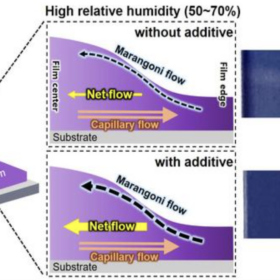
Organic cell based on additive-based coating solution achieves 16.27% efficiency
Scientists from the Korea Institute of Science and Technology (KIST) have used a dielectric additive in organic photovoltaic fabrication to produce uniform films in ambient humidity levels between 10% and 70%. The researchers said the approach improves process stability for organic solar cells.

Italian startup building power beaming tech for drones
SunCubes, a startup from Italy, is developing laser-based wireless power transfer technology to provide in-flight energy to drones for uninterrupted recharging. It has raised seed funding to finance a minimal viable product.

Improving vertical PV performance with adjustable reflectors
Researchers in Taiwan have developed an adjustable aluminum reflector system that boosts the performance of vertically mounted bifacial solar modules. The prototype delivered a 71.32% total power gain over a baseline system without reflectors.
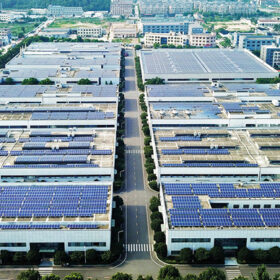
Chinese PV Industry Brief: China passes 1.1 TW of solar despite June slowdown
China added 212.2 GW of new solar capacity in the first half of 2025, pushing total installed PV capacity past 1.1 TW, according to the National Energy Administration (NEA).

U.S. startup installs building-integrated, organic photovoltaic facade
Next Energy Technologies has completed the first installation of its transparent organic photovoltaic glass facade. The 9.3 m2 installation is located at its headquarters in Santa Barbara, California.
