Low-cost organic pigment coating for 21.1%-efficient perovskite solar cell
Scientists in the United States have conceived a new process to apply a low-cost organic pigment to perovskite solar cells. The new technique is claimed to increase the efficiency of the devices by around 1.2% and also to improve the cells’ stability.
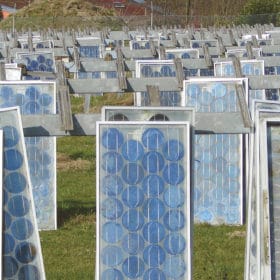
PV module recycling could harm US solar industry
The PV industry can’t claim to be a clean energy source if it leaves a trail of hazardous waste.

The weekend read: Solar needs aluminum, but it has a carbon problem
Few doubt that aluminum frames will be a part of the solar module for some time to come. And with PV manufacturing continuing to scale, the carbon footprint of this versatile metal may prove a sustainability challenge.
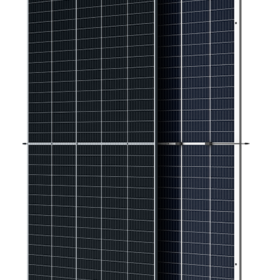
Largest wafer offers lowest LCOE, finds DNV GL
Looking to answer one of the year’s big questions concerning solar technology, energy consultancy DNV GL was invited by Trina Solar to compare the performance of its modules based on the 210mm wafer with the 166mm and 182mm dimensions also introduced recently. The analysis revealed an advantage for modules incorporating the largest wafer, based on simulation of bifacial systems at two locations in Spain and the United States.

New three-step module testing from TÜV Rheinland
German standards body TÜV Rheinland is introducing a new testing and certification program for pv modules. The program incorporates component specific tests and ongoing, random testing of running production lines. Hanwha Q Cells assisted in the development of the program, and this week announced it is the first manufacturer to receive the new Quality Control PV Certification.
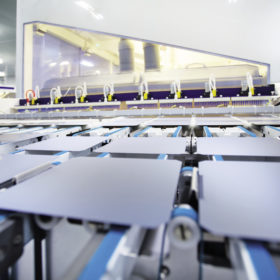
Longi hits annual module target with a month to spare
The Chinese giant, which had a $40 billion stock price yesterday, has announced it shipped 20 GW of solar panels by Monday.
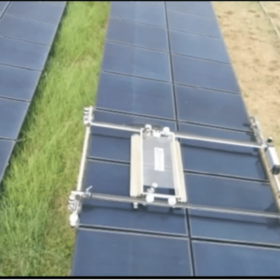
Indian startup unveils modular panel-cleaning bot
Indian startup Solavio Labs has designed a modular, autonomous bot to clean solar panels. The system is purportedly compatible with most structures, mounting areas, and climate conditions.

Simulation tool for mismatch conditions at cell level
Scientists in Portugal have proposed a new framework to simulate mismatch conditions at the cell level. They claim the tool is particularly suitable for simulations of small PV systems with few module strings.
Chinese PV Industry Brief: JA Solar commissions 3.5 GW module factory in Shanghai
And Risen has agreed to buy 2.25 billion wafers from monocrystalline wafer manufacturer Wuxi Shangji Automation, while Trina has cornered another 30,000-ton slice of the global polysilicon market.

pv magazine video: US storage market under spotlight
In pv magazine’s second roundtable session, Advanced technologies, the U.S. storage market came under the spotlight – in particular, the lessons that can be learned from solar as the market moves towards greater maturity. Also under discussion was the trend among PV manufacturers to producing ever larger cells and modules in the continuous drive to bring down LCOE. But is big necessarily better?
