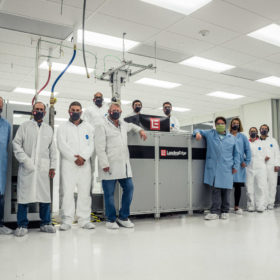
US startup wins $7.6 million in funding for ribbon silicon furnaces
Leading Edge Equipment Technologies falls in the kerfless solar wafer or direct solar wafer category. Its “drop-in” manufacturing tech cuts wafer costs by 50%, drives up commercial PV power by 7%, and reduces manufacturing emissions by 50%. It’s the emissions piece that may be winning over investors.
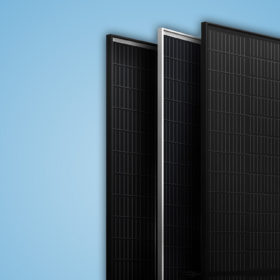
Trina brings 405 W module of Vertex series to the European market
The new module, called Vertex S, is designed for residential and commercial rooftop installations. The efficiency of the module is 21%, one percentage point more than the previous model.
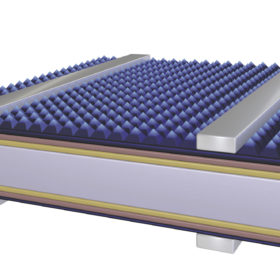
China’s Jinergy bets on heterojunction
China reportedly has 10 GW of heterojunction cell capacity already up and running or under construction. Liyou Yang, general manager at Chinese state-owned manufacturer Jinergy that as costs for the technology continue to fall, more manufacturers in Asia can be expected to make the switch.

Modular raft system for floating PV plants
Qi-energy and Candock have developed a raft-based system for utility-scale floating PV plants, based on special high-density polyethylene “dock cubes” supporting a nonmetallic frame.
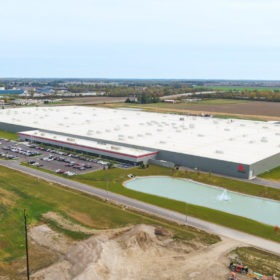
First Solar posts strong Q4 results, announces 445 W module
Strong net sales, 1.6 GW of bookings, plans for a 445 W panel, and environmental recognition for the Series 6 line point to another successful quarter.
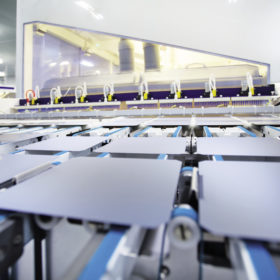
Chinese PV Industry Brief: Stable wafer and cell prices and another 2.2 GW solar-plus-storage project
Solar manufacturers Longi and Tongwei have frozen next month’s prices.
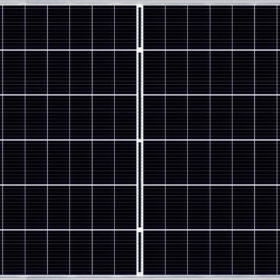
Canadian Solar launches 640-665 W panel series
The HiKu7 CS 7N-MS series is available with power output ranging from 640-665 W and efficiency ranging from 20.6-21.4%. The panel, which is the most powerful product the company brought to the market to date, is considered ideal for utility-scale and commercial and industrial PV projects.

Can CIGS thin-film PV manufacturing return in the US?
A scientist familiar with First Solar’s earlier efforts in CIGS makes the case for the CdTe pioneer to return to the technology.

Meyer Burger, CSEM to develop new PV cells, modules
Meyer Burger has extended its seven-year tie-up with the Swiss Center for Electronics and Microtechnology by three years. They aim to achieve module-level production efficiencies of more than 24%, while also cutting costs.
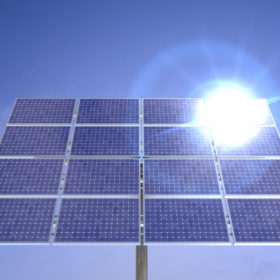
The best PV module cooling technique
An international research team has analyzed all existing cooling technologies for PV panels and has indicated the current best options and future trends of research. According to its findings, active water cooling, although expensive and not particularly practical, is the most effective cooling technique while passive cooling systems, despite being easy to apply, have still limited possibilities.
