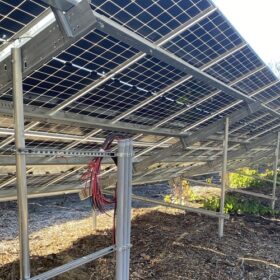
Parameter analysis of 842 bifacial solar modules from 236 manufacturers
An international research team has conducted an extensive overview of bifacial solar modules from 39 countries. Their analysis took into account the best of the median values indicated in the product specifications and found that heterojunction and back-contact panels provide the best parameters.
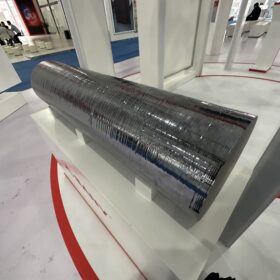
Risk spillover dynamics in Chinese PV supply chain
Researchers in China have investigated how market segment spillover effects materialized in the Chinese PV supply chain from 2017 to 2024, and have identified a series of hedging strategies that could help manufacturers reduce risks. Their analysis showed these effects are triggered based on an ‘’upstream-driven, downstream-responsive’’ contagion pattern.

Japanese projects to pilot solar on low load-bearing roofs, BIPV windows
A partnership between PXP Inc and Tokyo Gas Co is working on developing film-type chalcopyrite solar cells for industrial roofs with low load-bearing capacity. Elsewhere, a coalition of partners is installing inner windows featuring perovskite solar cells at Tokyo’s Telecom Center Building.

Chinese PV Industry brief: GCL Optoelectronics raises $27.5 million for perovskite factory
GCL Optoelectronics Materials has raised nearly CNY 200 million ($27.5 million) in a C2 financing round to advance perovskite solar manufacturing and research at its new gigawatt-scale facility in China’s Jiangsu province.

Solex Energy rolls out n-type solar modules surpassing 23% efficiency
Solex Energy has unveiled two n-type solar modules with more than 23% efficiency, designed for high-irradiance zones and the extreme climate conditions of northwestern India.
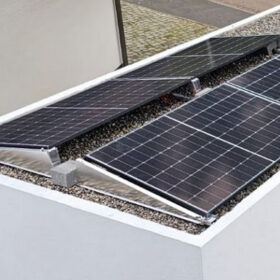
German mounting system provider launches plug in mini rooftop PV system
Germany-based Ilzhöfer is offering plug-in mini PV systems for flat and trapezoidal sheet metal roofs. The arrays feature 450 W bifacial solar panels.
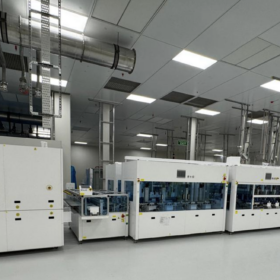
Reliance Industries to start solar cell production in India in Q3
Reliance Industries Ltd. (RIL) is set to commission its solar cell factory in the third quarter, achieving a significant milestone in its goal of building a fully integrated solar manufacturing value chain in India.
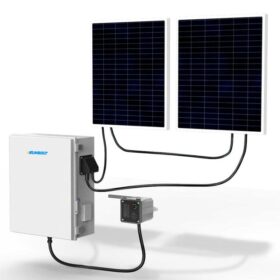
Sunbolt introduces pre-assembled solar ‘backyarder’ kit
The kit includes two 50 W solar panels, a 400 W inverter, and two batteries and powers devices directly with 120V GFCI ports and USB ports.

Tokuyama, OCI begins construction on polysilicon factory in Malaysia
The new manufacturing facility will be located at the Samalaju Industrial Park in Sarawak, Borneo, and will have a capacity of 10,000 MT.

Combined indoor, outdoor testing shows sensitivity to moisture in TOPCon PV modules
Researchers at the Fraunhofer ISE have combined indoor and outdoor testing to understand and quantify degradation processes in TOPCon solar panels. The novel methodology is intended to provide data for validating and improving stress laboratory protocols.
