
China National Petroleum Corporation achieves 25.05% efficiency for inverted perovskite solar cell
The Chinese energy and oil company said the cell can be used as a top device in perovksite-silicon tandem configurations. The result was confirmed by the Shanghai Institute of Microsystem and Information Technology (SIMIT).

Canada opens review into anti-dumping duties on Chinese PV modules, laminates
Canada’s International Trade Tribunal is running an interim review of the country’s anti-dumping and countervailing duties on solar modules and laminates from China, following a request to exclude flexible solar panels that affix to curved surfaces.
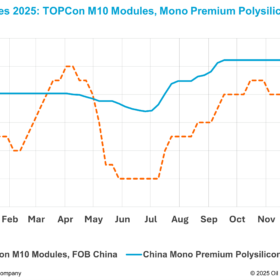
China module market watches 2026 export rebate signals as polysilicon consolidation platform company is registered
In a new weekly update for pv magazine, OPIS, a Dow Jones company, provides a quick look at the main price trends in the global PV industry.

Aluminum-doped zinc oxide glass coating for shielded space solar PV modules
South Korean researchers developed a process that allows the use of aluminum-doped zinc oxide film in radiation-shielding quartz glass. A demonstration in III-V solar photovoltaic space modules showed it significantly enhanced shielding effect of bare quartz glass.
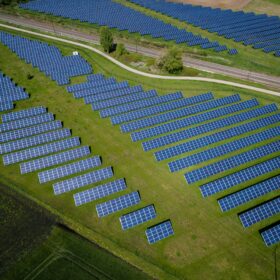
Italy assigns 1.1 GW in PV auction open to projects with ‘non-Chinese’ modules
The procurement exercise, the second solar auction under Italy’s Fer X incentive scheme and first to exclude the use of Chinese solar modules, cells and inverters for projects above 1 MW in size, concluded with a final average price of €0.06637/kWh.
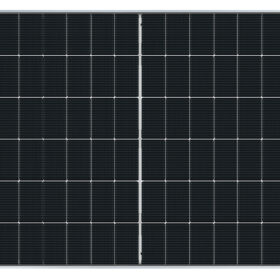
Astronergy launches 750 W anti-dust TOPCon solar module
The Chinese manufacturer said its new Astro 7 TOPCon module features an innovative self-cleaning frame and a power conversion efficiency of 23.2%.
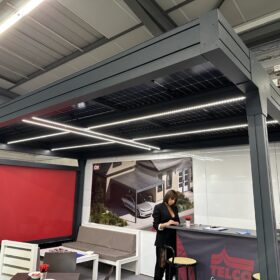
New all-aluminum solar carport from France
Gamme Telco has launched an all-aluminum solar carport compatible with nearly all standard PV modules and customizable in size and color. The system offers concealed wiring, integrated rainwater management, and scalable configurations for residential and commercial use.
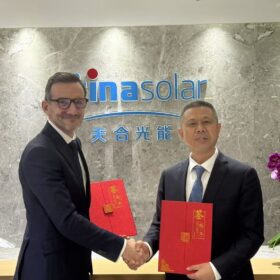
Trina Solar to invest in Holosolis PV gigafactory in France
Trina Solar and Holosolis signed a strategic cooperation agreement at the recent France–China summit, consolidating the Chinese manufacturer’s role as a key partner in a plan to manufacture 5 GW of solar cells and panels a year.

Eternal Sun offers solar simulators for space PV testing
A new optional light emitting diode (LED) board pre-calibrated for AM0 testing is available for the company’s flagship LED solar simulators.
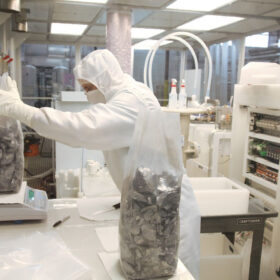
Beijing group creates official entity to guide China’s polysilicon capacity
Industry analysts say a new Beijing-based coordination platform created by China’s top polysilicon producers signals a turn toward managed capacity, as the sector tries to halt a steep price slide and mounting consolidation pressures.
