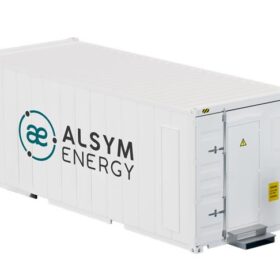
Alsym and Juniper to deploy 500 MWh of sodium-ion battery storage
Strategic agreement will see California-based renewables developer ramp up sodium-ion battery deployment. Deal follows Alsym Energy entering 8.5 GWh partnership with iron flow battery business ESS.

SoftBank to make next-gen zinc-halogen battery cells in Japan for AI data centers
SoftBank’s mobile arm is gearing up to scale the intriguing zinc-halogen battery cell chemistry to 1 GWh annual production.
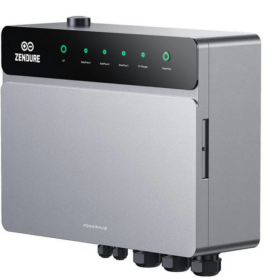
Zendure launches EMS combining rooftop PV, battery storage and household loads
Zendure has launched PowerHub, a new energy management system for homes and small commercial sites that integrates solar PV, battery storage, grid power, EV charging, heat pumps, and smart home devices into one platform. The system supports up to 150 kWh storage capacity and up to 43 kW three-phase PV input, while the 3-phase version enables EV charging at up to 22 kW.
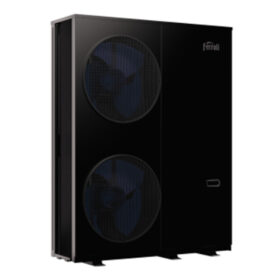
Ferroli launches monobloc propane air-to-water heat pumps for residential, commercial use
The Italian manufacturer has expanded its propane monobloc heat pump range with new models delivering up to 85 C flow temperature and achieving a seasonal coefficient of performance of 4.95.
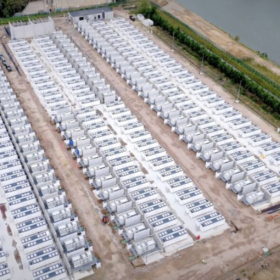
BloombergNEF confirms energy storage has reached the 100 GW era
A record year, and an incredibly strong outlook for the energy storage sector.
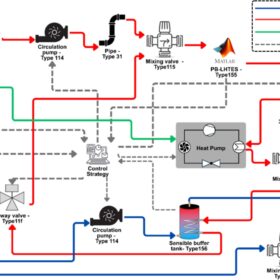
Hybrid latent-sensible storage can improve PVT-driven residential heat pump COP by 72.4%
A research team in Italy developed a PVT-driven heat pump system for domestic hot water production that combines packed-bed latent heat storage with sensible thermal storage to better balance supply and demand. Their simulations showed that hybrid storage coupled with temperature-based routing significantly improves system efficiency, raising heat pump coefficient of performance and increasing renewable energy utilization.

Grid operators may reduce renewables penetration if data center growth continues unchecked, says ENTSO-E
A new report from the European Network of Transmission System Operators for Electricity explores the potential for data centers to become flexible assets in Europe’s electricity system, as well as how to manage grid planning and grid security.
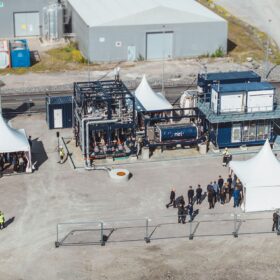
The Hydrogen Stream: Nel ASA launches new pressurized alkaline electrolyzer
Nel ASA states that its new electrolyzer can achieve an estimated turnkey full-scope cost of below $1,450 per kW for a 25 MW plant, with additional cost synergies expected at larger scales.

New electrolyte tech enables stable operation of high-voltage sodium-ion batteries
U.S. researchers developed a meta-weakly solvating electrolyte that optimizes sodium-ion solvation structure, enabling faster ion transport, reduced side reactions, and improved interfacial stability in high-voltage sodium-ion batteries. This design significantly extends cycle life and outperforms conventional and localized high-concentration electrolytes by promoting more uniform and stable electrode–electrolyte interfaces.
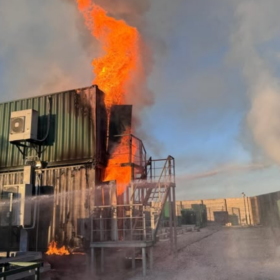
Short circuit in nickel manganese cobalt batteries causes fire at UK BESS project
Project owner told ESS News that fire at one of the UK’s oldest grid-scale BESS projects was caused by fault with nickel manganese cobalt (NMC) technology used in some early UK BESS projects. The fire occurred days before scheduled augmentation to upgrade Rufford Colliery BESS site.
