
The Hydrogen Stream: Microorganisms affect underground hydrogen storage
Researchers from China University of Petroleum have reported on hydrogen-microorganism interactions in underground storage, while Sungrow Hydrogen has won a $4.1 billion bid for an integrated hydrogen, ammonia, and methanol project.
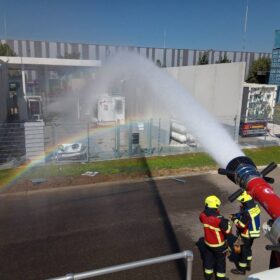
Fire brigade extinguishes fire at new hydrogen refueling station in Germany
Firefighters in Gersthofen, Germany, have extinguished a fire at a hydrogen refueling station that was inaugurated on June 17 as part of a pilot project supported by the German government.
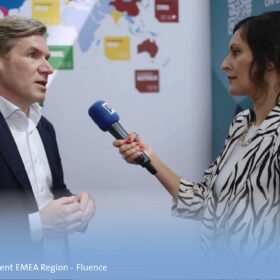
‘From the next two years on we start to see battery supply in Europe’
At Intersolar Europe 2024, ESS News spoke with spoke with Paul McCusker, President EMEA Region at Fluence, about the company’s regionalization strategy and its ambition to bring a locally made products to its customers in Europe. McCusker also spoke about EMEA-region specific technology preferences and requirements, particularly regarding noise levels and safety. Additionally, he presented his views on battery price movements and key challenges to market growth.
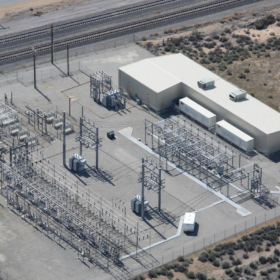
India launches 1 GW/2 GWh battery storage tender
Solar Energy Corp. of India (SECI) has started accepting proposals to set up 1 GW/2 GWh of standalone battery energy storage systems (BESS) connected to India’s interstate transmission system (ISTS). Bidding closes on Aug. 5.
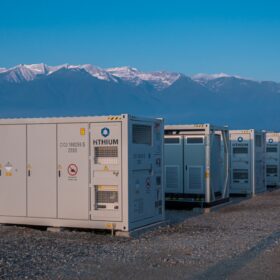
Bulgaria preps 3 GWh standalone energy storage tender
The Bulgarian Ministry of Energy is readying to launch a tender on September 2 and provide Capex support for the construction and commissioning of 3 GWh of standalone energy storage facilities. The public call is for projects equal to or greater than 10 MW with at least two hours of storage capacity, which will be primarily used in the frequency regulation markets.
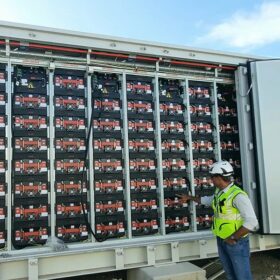
Sosteneo, Enel finalize partnership for 1.7 GW battery storage rollout in Italy
The Generali Group company has signed an agreement to acquire a minority share of Enel Libra Flexsys, which aims to roll out 1.7 GW of battery energy storage projects in Italy. “Revenues are fully contracted for 15 years through capacity agreements with Enel as well as capacity payments from Enel that are backed by Terna, Italy’s transmission system operator,” Sosteneo says.

CATL signs 4 GWh supply deal with Israel’s BLEnergy
Chinese battery manufacturer CATL is expanding its presence in the Middle East and Europe via a 4 GWh long-term supply agreement with Israeli integrator BLEnergy.

Uniper to recommission 160 MW pumped storage plant in Germany
The Happurg pumped storage plant was shut down in 2011 for safety reasons after the base of the upper reservoir was damaged. Uniper has carried out feasibility studies on the site, with a view to reconnecting it to the grid in 2028. The facility can store approximately 850 MWh of electricity in the form of pumped water.

‘Good time to be battery storage developer’
At Intersolar Europe 2024, ESS News spoke with George Hilton, research and analysis manager at S&P Global, about the state of play in the battery energy storage supply chain and falling prices. According to Hilton, the overcapacity at every level of the supply chain has led to prices that are no longer sustainable for many market players. Meanwhile, technological innovation has led to an unprecedented variety of battery storage technologies on offer, and for a great number of markets the right time to jump in is now.

Hoymiles launches AC-coupled battery for balcony PV systems
The Chinese company says its new product has a storage capacity of 2,240 Wh and an expected lifespan of 6,000 cycles.
