
‘Breaking barriers is rarely a solo effort’
This week Women in Solar+ Europe gives voice to Sara Kapeller, CEO of Germany’s Twistor GmbH. She says building impactful careers in the renewable energy landscape requires courage, curiosity, and inclusion, turning setbacks into growth and empowering more women to lead technical innovation and shape the future.

AccelerateEU backs 200 GW storage goal but omits dedicated mechanism
The European Commission’s AccelerateEU energy crisis plan endorses a 200 GW battery storage target for 2030 but proposes no dedicated financing mechanism to reach it, according to SolarPower Europe (SPE), which is calling for a separate EU-wide auction funded by emissions trading revenues.

Israeli storage developer moves into solar EPC with majority stake deal
Airengy Ltd., listed on the Tel Aviv Stock Exchange, has signed a memorandum of understanding to acquire a 51% stake in Green-Go, an Israeli PV developer and engineering, procurement, and construction (EPC) contractor with expertise in agrivoltaics.
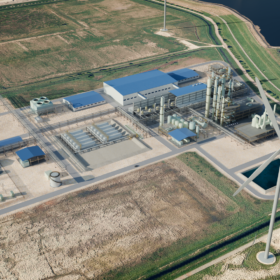
Dutch government grants priority status to planned polysilicon factory
The Ministry of Economic Affairs and Climate of the Netherlands has identified a planned polysilicon factory in the country as of strategic importance under the Net Zero Industry Act.
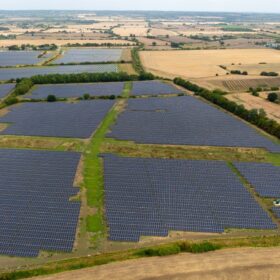
UK solar developer secures $1.1 billion financing package
Enviromena announces a £825 million ($1.1 billion) senior portfolio financing package, providing immediate capital to support the buildout of a 1 GW pipeline. The credit facility was underwritten by a group of institutional investors.
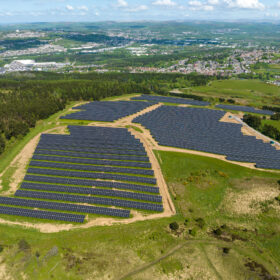
UK solar generation hits record 15 GW as gas falls to historic low
Solar set a new generation record on Great Britain’s electricity grid during a week that also saw zero-carbon supply reach an all-time high. The new records come as the grid operator expands demand-side flexibility markets in anticipation of lower summer demand driven by strong solar irradiance.
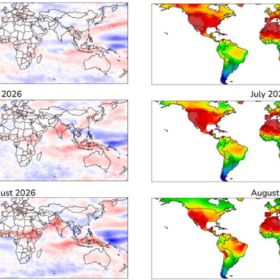
Developing El Niño points to stronger solar conditions across Australasia and South Asia
In a new weekly update for pv magazine, Solcast, a DNV company, provides a June–August 2026 outlook indicating mostly neutral to positive solar irradiance globally, with stronger gains in regions like Australasia, South Asia, West Africa, and Central America—patterns consistent with a developing El Niño. Negative anomalies are limited and mostly early-season, while Europe and the U.S. show modest or mixed signals, with improvements or neutrality dominating as the season progresses.

Colombia reopens long-term energy contracting with new renewables auction
Colombia has launched a 15-year auction scheme to procure solar, storage, and hybrid capacity, with delivery starting in 2030. The mechanism introduces time-of-use products and aims to improve reliability while expanding renewable energy uptake.
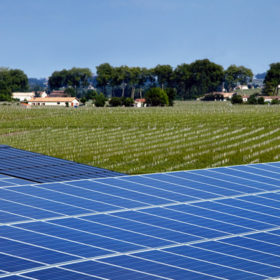
France streamlines renewables environmental permitting with new provisions
Published in the French Official Journal on April 22, a new decree aims to speed up the handling of appeals against strategic environmental projects, particularly in the renewable energy sector. It introduces direct access to administrative courts of appeal and tightens rules on deadlines and procedures for challenging projects.
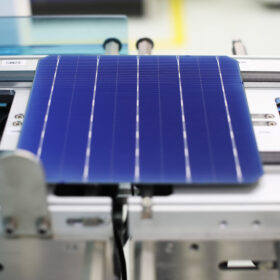
Chinese PV Industry Brief: DKEM seeks cash injection to scale up gigawatt-level production of copper metallization paste
DK Electronic Materials (DKEM) plans to raise up to CNY 3.0 billion (USD 413 million) via a private placement to fund PV paste, metal powder expansion, R&D, and debt repayment. The company is advancing high-copper PV paste toward volume production for TOPCon 3.0 cells.
