
Ascent Solar testing CIGS modules for power beaming, marine applications
The US-based developer of copper indium gallium selenide thin-film PV products said its modules will be tested without modifications by companies developing marine PV and power beaming applications.
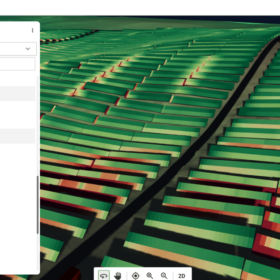
RatedPower enhances solar plant design platform with 3D simulation capabilities
RatedPower has introduced a 3D simulation feature to improve accuracy in utility-scale solar design, enabling more precise yield modeling that reflects terrain variations and shading, validated against real production data.

France adds 4.2 GW of solar in first nine months of 2025
Statistics from Enedis show that 4.2 GW of solar connected to France’s grid in the January-September period, including 82 MW paired with storage, marking a slight decline from 2024.
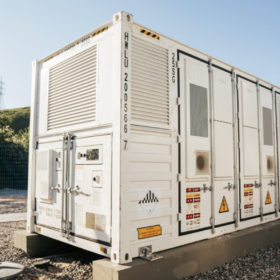
Energy storage could cut Brazil’s electricity system costs 16% in 2029
Storage is essential to expand renewables penetration and ensure grid flexibility, according to a study by consultants PSR. Regulatory and tax barriers still limit the sector, however, and new revenue sources are needed to make projects viable.

Future-proof or fail: how battery storage projects can thrive in Germany
Germany’s battery storage boom is real but so are the bottlenecks. As capital pours in and gigawatt-hour-scale projects near launch, grid connection delays and regulatory uncertainty are threatening to dampen momentum. At the 3rd BVES Investor Summit in Berlin, more than 500 industry leaders gathered to weigh the hype against the hard realities.
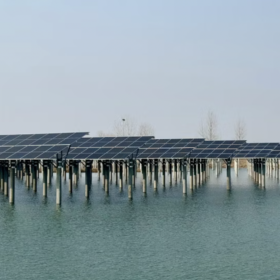
Taiwan to revise environmental impact rules amid floating solar scrutiny
The Taiwanese government has revealed plans to update environmental impact assessment (EIA) standards for solar projects, following storm-related damage to installations and growing public concern over floating PV deployment.

Powerchina completes 200 MW solar project for Enel in Colombia
Powerchina has finished the 200 MW Guayepo III solar farm in northern Colombia, connecting it to the grid six days ahead of schedule for Italian utility Enel.
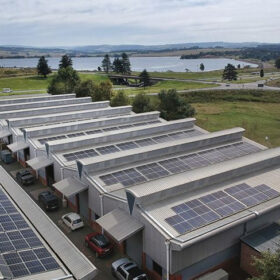
South Africa simplifies registration process for distributed PV
South African utility Eskom is urging consumers with grid-tied rooftop solar to register their systems and integrate them with the national grid, waiving registration fees until March 2026.

Unlimited low-cost energy storage
In its latest monthly for pv magazine, the International Solar Energy Society (ISES) explains how pumped-hydro energy storage combined with PV power generation could provide 24/7 power to data centres
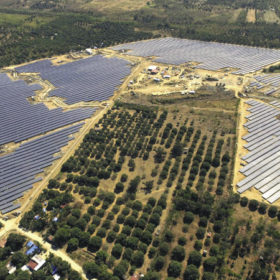
Philippines raises FIT levy for renewable payments
The energy regulator of the Philippines has approved an increase in the feed-in tariff allowance (FIT-All) to PHP 0.2073 ($0.004)/kWh from PHP 0.1189, with the new rate set to take effect next month.
