
‘Blaming renewables for Spain’s blackout is like faulting the thermometer for the fever’
The recent blackout in the Iberian grid should not be interpreted as failure of renewables. But it did provide Europe with a sign the energy system is changing, shedding light on the necessity to govern 21st-century technologies with 21st-century control systems.
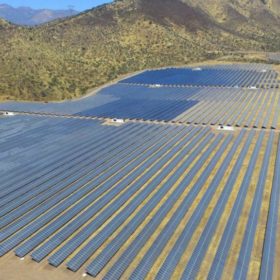
PV module demand in Brazil’s centralized generation market declining after reaching 5.1 GW in 2024
The volume of imported modules was 18% lower than in 2023. After growth in 2024 compared to 2023, installations of large solar plants are expected to face a decline in 2025, with the combination of energy prices close to the floor and worsening curtailment potentially postponing new investments.

How to empower Europe’s PV, storage and inverter stakeholders when segmental balancing unfolds?
EUPD’s 2024/25 rating assessed hundreds of PV, inverter, and storage brands active in Europe. Out of these brands, the shortlisted group went through an extensive rating process. These rated brands represent the top 2–3% of photovoltaic manufacturers globally, with slightly varying percentage thresholds for inverter and storage segments—each analyzed for their performance in financial resilience, innovation, market trust and credibility, and ESG leadership.

Chile can achieve emission-free electricity system by 2035 with technical and economic support
A study developed by the Chilean Association of Renewable Energies and Storage (ACERA AG) and the Institute of Complex Engineering Systems (ISCI) concludes that it is technically feasible to operate the National Electric System without fossil fuel generation, with investments in renewable energy storage, and flexible demand.
Scatec starts constructing large-scale solar, battery storage project in Egypt
Work is underway on a 1.1 GW solar project with 100 MW/200 MWh of accompanying battery energy storage in Egypt. The first phase of the project is scheduled for commercial operation during the first half of next year.
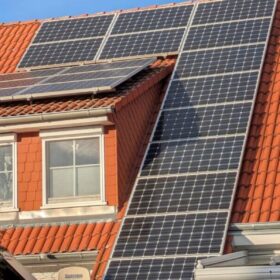
AE Solar and Fraunhofer CSP develop solar module optimized for partial shading
The work is being carried out as part of the “SegmentPV” project, which runs until the end of September. By segmenting the module layout and using integrated bypass diodes, the new module achieves higher yields and a lower risk of hot spots.

How to make solar module stockpiling cost-effective
Researchers investigated which solar module stockpiling conditions could help to ensure stable solar PV deployment at the lowest cost in Europe. The scientists demonstrated that stockpiling is cost-effective primarily under unfavorable import conditions.

SolarEdge rebounds on Q1 earnings surprise
The inverter and energy storage provider posted a second straight quarter of positive cash flow as it recovers from a difficult year.
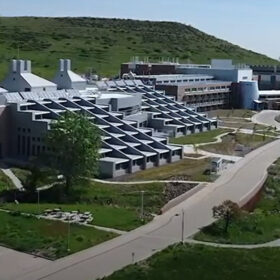
U.S. National Renewable Energy Lab announces layoffs
A statement released by NREL calls the layoffs an “involuntary separation,” thanks them for their work and acknowledges that the mission is critical to achieving “an affordable and secure energy future.”

Chinese PV Industry Brief: Tongwei, GoodWe post 2024 losses
Tongwei says it recorded a $969 million net loss for fiscal 2024, while GoodWe posted an $85 million loss and Ginlong’s net profit fell 11.3% to $95 million.
