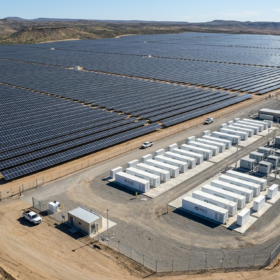
Solar approaches 3 TW, but the industry faces new challenges
Global solar PV capacity reached around 2,974 GW by end-2025, with nearly 698 GW added in 2025. The sector, however, is shifting from rapid deployment to integration challenges, as high penetration rates drive curtailment, storage demand, grid constraints, and evolving policy and market designs.

India’s storage market shifts from tenders to execution
Ratul Puri, chairman of Hindustan Power, tells pv magazine that India’s battery energy storage system (BESS) market is moving from aggressive tendering toward large-scale project execution, as the country increasingly prioritizes grid integration, transmission readiness and long-term supply resilience.
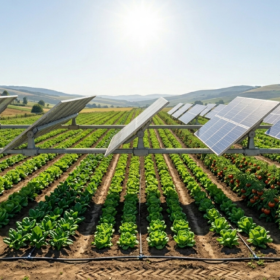
Plug-and-play control framework for adjusting panel tilt in agrivoltaics
A Cornell University research team developed a control framework that simultaneously considers past and future conditions when determining solar panel tilt angle. The researchers told pv magazine it is designed to be plug-and-play, allowing for software developers and solar operators to incorporate their optimization algorithms directly into the framework.
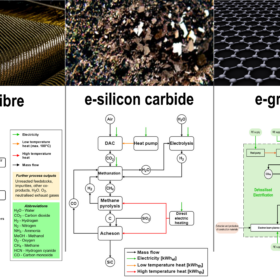
Low-cost solar PV can turn CO2 into profitable materials enabling negative emissions
Low-cost solar PV enables to turn CO2 from an unwanted burden into a precious raw material and sequestered in materials with many applications. This effectively reframes carbon capture, utilization, and sequestration as a monetizable carbon dioxide removal option. Three recent studies on electricity-based carbon fiber, silicon carbide, and graphene aimed at enabling large-scale negative emissions by 2050.

Hanwha Japan unit closes JPY 9 billion solar fund loan
Sumitomo Mitsui Banking Corp. (SMBC) has arranged a JPY 9 billion ($57 million) syndicated loan for Q.ENEST Holdings, the power business spun out of Hanwha Japan in 2023, to finance an 80 MW portfolio of distributed low-voltage solar assets across Japan.
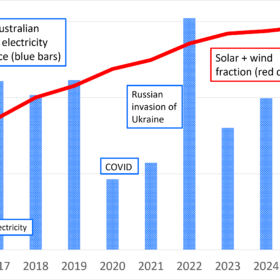
Very low cost rooftop solar and batteries slashes domestic energy cost – Part 1: Australia
Rooftop solar in Australia provides the cheapest, cleanest and most reliable domestic energy in history.
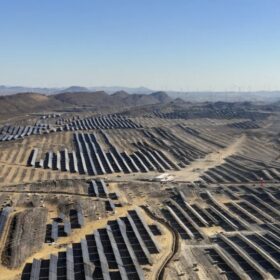
Datang plans 14.6 GW renewables cluster in China
The massive renewable energy complex will include 8 GW of solar, 4 GW of wind, 2.04 GW/8.16 GWh of energy storage, and 2.64 GW of coal-fired power. The project is planned to be located in China’s Inner Mongolia Autonomous Region and deliver clean electricity to the energy-intensive Jiangsu province.

Armenia allows construction of energy storage systems
Amendments to Armenia’s Energy Law permits the development of energy storage systems for the first time, subject to licensing. Systems smaller than 1 MW, or those above 1 MW designed for self-consumption, are exempt from licensing.
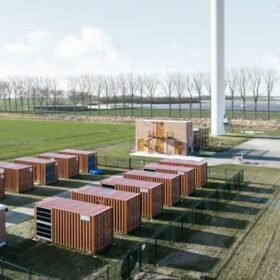
Germany, UK, Bulgaria: Europe’s top 3 co-location markets
Germany led the way with the UK and Bulgaria tied in second place, followed by Spain, Hungary, and France.
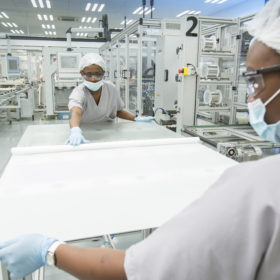
ARTsolar challenges local content compliance in South African solar tenders
A High Court in South Africa ordered the country’s Ministry of Mineral Resources and Energy to deliver full documentation relating to three solar tenders awarded in 2021 and 2022 to local solar manufacturer ARTsolar, after the company questioned if the preferred bidders had followed local content requirements for PV modules set out in the tenders. ARTsolar told pv magazine its legal team is currently reviewing the documentation it has received.
