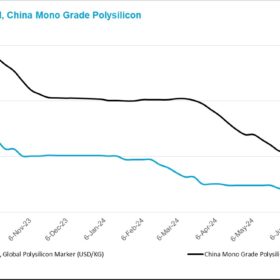
Polysilicon prices stable, futures listing opens possibilities in China
In a new weekly update for pv magazine, OPIS, a Dow Jones company, provides a quick look at the main price trends in the global PV industry.
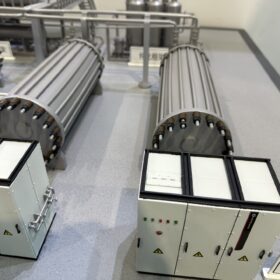
New method to calculate levelized cost of hydrogen
Scientists in Australia have incorporated overload capacity and power-dependent efficiency of the electrolyser in a novel techno-economic model to calculate the levelized cost of hydrogen. The proposed methodology was applied to ascertain the impact of internalizing environmental costs on the cost-competitiveness of green hydrogen compared to grey hydrogen.
Australian government approves Central-West Orana REZ transmission project
The Australian federal government has granted planning approval for the Central-West Orana Renewable Energy Zone (REZ) transmission project, allowing construction to begin on infrastructure to connect renewable energy projects to the grid.
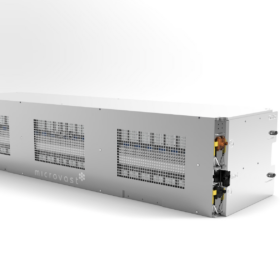
Microvast introduces grid-scale LFP battery
Microvast has developed a grid-scale lithium ferro-phosphate (LFP) battery that packs 6 MWh into a 21-foot container.
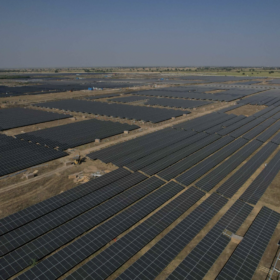
SJVN awards 1.2 GW solar projects in India
Acme Solar, Essar Renewables, NTPC Renewable Energy, Onward Solar, and SAEL Industries have won SJVN’s latest tender for developers for 1.2 GW of solar across India.
US government lends $1.45 billion to Qcells for solar factory
The US Department of Energy (DoE) has announced a conditional commitment to lend $1.45 billion to Qcells for a factory producing solar ingots, wafers, solar cells, and PV modules in the state of Georgia.
Sundrive cuts jobs, restructures ahead of solar tech commercialization
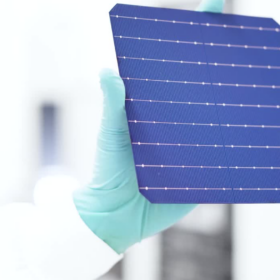
Australian solar cell specialist Sundrive Solar has announced job cuts, a change of leadership, and the restructuring of its business to prepare for the commercialization of its copper electrode technology.
Jera Nex acquires US solar sites from Lightsource bp
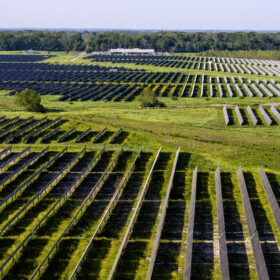
Jera Nex has purchased two US solar arrays totaling 395 MW from Lightsource bp. The acquisition marks Jera Nex’s first deal since it launched in April. Lightsource bp will continue to manage assets and provide maintenance services at the projects.
PV industry faces consolidation, says JinkoSolar
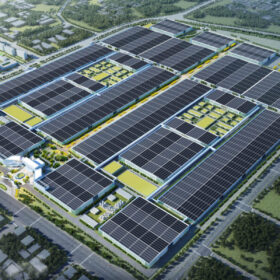
JinkoSolar has begun converting its production to n-type tunnel oxide passivated contact (TOPCon) products to stay competitive, says Frank Niendorf, the company’s general manager for Europe. He predicts that several market players in the value chain will exit the market soon.
Sineng Electric launches world’s largest sodium-ion battery storage project
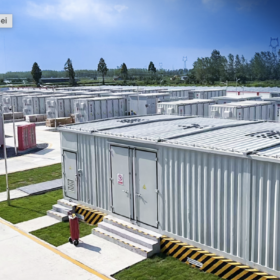
Sineng Electric’s 50 MW/100 MWh sodium-ion battery energy storage system (BESS) project in China’s Hubei province is the first phase of a larger plan that will eventually reach 100 MW/200 MWh. The initial capacity has already been connected to the grid and can power around 12,000 households for an entire day.
