
Argentina tenders 700 MW of battery storage nationwide
Argentina’s Energy Secretariat has opened a national and international tender for battery energy storage systems (BESS) at grid-constrained nodes outside the Buenos Aires metropolitan area, targeting about $700 million in investment.

UK government issues open call for experts to shape AI energy policy
The United Kingdom is inviting AI and energy specialists to identify datasets that could make its energy system more efficient, secure and digitized.
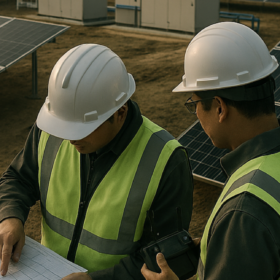
South Korea eases solar siting rules to cut permitting delays for PV projects
South Korea has passed legislative amendments to limit the ability of local authorities to impose separation distances on solar projects, removing a major permitting barrier for PV developers.

Moldova installs 315 MW of solar in 2025
Moldova had a record year for solar deployment last year, taking cumulative capacity to 710 MW. There is now just under 1 GW of renewables installed in the country.
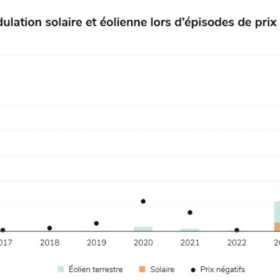
PV curtailment surges in France as grid adapts to rising solar output
French grid operator RTE says almost 3 TWh of renewable energy was curtailed in 2025, driven by higher solar output and more frequent negative-price market periods.
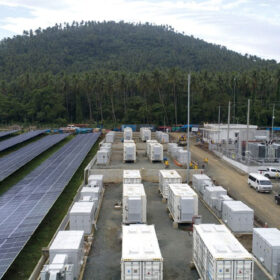
Philippines mandates energy storage for renewables plants over 10 MW
Department of Energy (DOE) order sets out new rules for mandatory energy storage, including a minimum capacity of at least 20% of the generating plant’s installed capacity. DOE also calls for energy storage systems (ESS) installations to have grid supporting capabilities, such as grid-forming inverters to help stabilize voltage and frequency.

‘Like many people, I’ve been the only woman in the room’
This week Women in Solar+ Europe gives voice to Charmaine Coutinho, Director – EMEA Energy Transition at UK-based FTI Consulting. She says the energy transition requires inclusive systems that actively involve underrepresented groups, ensuring diversity and equity at all levels. Drawing on decades in the sector, she emphasizes intentional mentorship, sponsorship, and transparent leadership as essential for meaningful change and career impact.

Greece to open applications for 130 MW agrivoltaics plan
Greece’s distribution grid operator will begin accepting applications for agrivoltaic systems on March 4, marking the first step in implementing a new law targeting 130 MW of capacity nationwide.

New model reveals pathway for land-efficient U.S. solar expansion
McGill University researchers used deep-learning computer vision to analyze 719 solar projects across the Western U.S. The study establishes a new “land-sparing” benchmark, providing developers with precise data to balance rapid capacity expansion with conservation and land-use priorities.
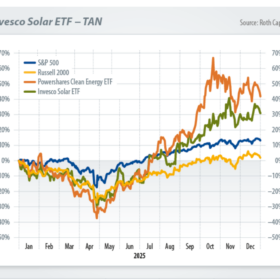
The future of solar is unwritten
Whatever decision the U.S. Department of Commerce makes on polysilicon imports, some market segments are in for a bumpy ride in 2026 as the expiration of tax credits and other policy levers change the trading environment faced by residential installers and others. Jesse Pichel and Lev Seleznov of Roth Capital assess what lies ahead for U.S. solar.
