
Germany’s national, federal highways could host 54 GW of PV
A new study by Germany’s Federal Highway Research Institute (BASt) points to strong potential for solar deployment across the nation’s roadways and highways.
Romania opens €150 million pot for co-located battery storage
The Romanian Ministry of Energy has launched a grant program for battery energy storage systems developed in conjunction with existing renewable energy facilities – wind, solar, or hydro.
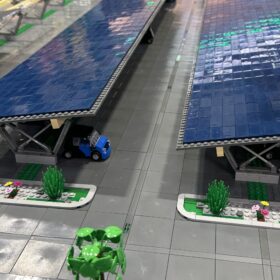
France publishes new provisions making solar mandatory on parking areas
France has enacted provisions mandating solar installations on parking areas, detailing calculation methods, exemptions, and fines for non-compliance.
Cyprus approves energy storage subsidy scheme
Applications for participation in the scheme will be accepted from January 15, 2025.

‘Returning to work from maternity leave after becoming a mom can be challenging’
This week, Women in Solar Europe (WiSEu) gives voice to renewable energy expert Ercilia Estrada Garzona. She says it’s crucial to recognize the pervasive negative assumptions about mothers regarding their ambition and commitment to their careers. “To combat these biases, organizations must take decisive action. This can be achieved by normalizing parental leave for all parents, ensuring transparency in career advancement and promotion prospects post-leave, and developing robust support systems to help employees transition back to work smoothly,” she states.

Learning from leading rooftop solar markets
A report from the Council of Energy, Environment and Water has analyzed nine of the ten countries with the largest rooftop solar markets to offer recommendations to other economies looking to accelerate rooftop solar deployment.

Dutch parliament approves end of net metering in 2027
Trade body Holland Solar says the Dutch parliament has approved eliminating net metering in 2027, giving the solar sector clarity to move forward.

Australia moves 1.4 GW of new solar, wind projects forward in Q3
Investment in large-scale renewable energy generation continues to trend upwards in Australia with more than 1.4 GW of new solar and wind projects, worth $3.3 billion, reaching financial commitment in the third quarter of 2024.
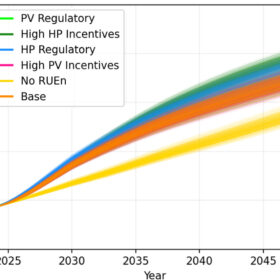
Stuck in a loop: The co-adoption dynamics of PV and heat pumps
Scientists in Switzerland have created a system-dynamics model for the adoption of PV and heat pumps in Swiss residential buildings up to 2050. They have examined several scenarios to see how the incentive for PV affects heat pump adoption and the other way around, and they have concluded that strong regulatory changes are necessary to completely decarbonize the residential sector.
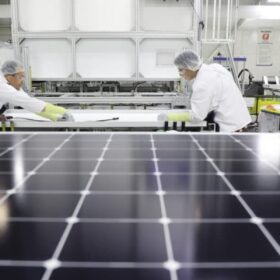
Maxeon solar panels shipped from Mexico denied entry to U.S.
U.S. Customs and Border Protection blocked Maxeon products despite “having provided clear and objective evidence” of a compliant supply chain.
