
IEA-PVPS report shows record year for US solar in 2023
The latest report from the International Energy Agency (IEA) Photovoltaic Power Systems Programme (PVPS) says solar records were broken across the United States in 2023, as international trade issues decreased and financial certainty increased, driven by the implementation of the US Inflation Reduction Act.

Africa needs regional strategy for PV manufacturing
A new policy paper from the African Policy Research Institute (APRI) recommends that Africa adopt a regionalized PV strategy to successfully integrate into the global solar value chain. It warns that without a coordinated approach, individual countries are unlikely to integrate into the global market.

UK launches cap-and-floor scheme for long duration energy storage
The UK government has unveiled a cap-and-floor scheme to kick start investment in long-duration energy storage. The first round of applications is scheduled for 2025.
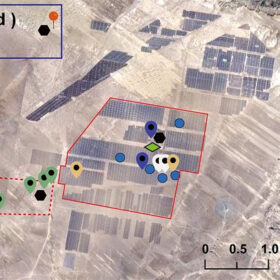
Large-scale PV has positive environmental effect on desert areas
Researchers from China found that big solar power plants have a positive positive impact on the ecological environment of desert areas. Their testing was conducted at a 1 GW solar park located in China’s northeastern Qinghai province.

Czechia planning retroactive cuts to feed-in tariffs for PV systems
The Czech government is trying to retroactively reduce feed-in tariffs (FITs) granted for PV projects between 2006 and 2013. The local solar sector has criticized the move, claiming that it could incite panic among investors.

New Zealand steps up approvals process for large-scale PV projects
Ten large-scale solar farms planned for New Zealand’s North and South islands are among 22 renewable energy projects with a combined capacity of 3 GW that have been listed for inclusion in the government’s “one-stop shop” fast-track approvals process.

Rooftop PV installations could raise daytime temperatures in urban environments by up to 1.5 C
New research from India shows that rooftop PV system may have “unintended” consequences on temperartures in urban environments. Rooftop arrays, for example, may potentially lower nighttime temperatures by up to 0.6 C.

‘Be a role model, and the change will come’
This week, Women in Solar Europe (WiSEu) gives voice to Elina Kivelä, chief of staff at Sweden’s Turn Energy. She says companies should implement mandatory physical training, daily wellness hours, great parental leave benefits, health check-ups, and a hybrid work model. “This is crucial for balancing family life, something we know women often struggle with the most,” she states.

EU approves aid for 5.4 GWh storage rollout in Poland
The European Commission (EC) has authorized a €1.2 billion ($1.3 billion) Polish state aid scheme to support investment into electricity storage facilities.

Italy’s regional governments approve 5.1 GW of utility-scale PV projects in January-September period
Italy’s regional governments approved 5.1 GW of solar in the first nine months of this year, with Sicily leading by approving around one-third of the total new capacity.
