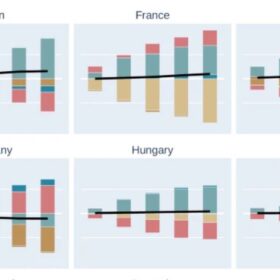
Massive amounts of vertical PV may reshape European energy market
A group of scientists led by the Joint Research Centre (JRC) of the European Commission has analyzed the impact of deploying more vertical PV systems in the European energy markets and has identified potential advantages that may be offered by this scenario. These include lower electricity prices, lower system costs, and an increasing power exchange between neighboring countries.
A 100% solar Indonesia in 2050
Indonesia has all the solar energy and pumped-hydro energy storage potential required to become a solar giant by mid-century. On current trends, Indonesia will be the fourth largest producer of solar energy by 2050.
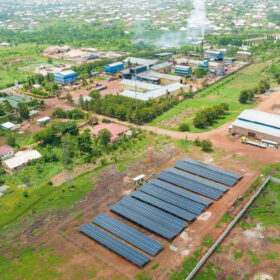
Can just-transition cash fire African renewables?
African governments are being encouraged to leave fossil fuels untapped in return for Just Energy Transition Plan (JETP) finance. Can these new financing plans from Western governments achieve their ambitious aims?

‘It is crucial for our industry to take proactive steps to engage and empower young girls from an early age’
This week, Women in Solar Europe (WiSEu) gives voice to Paula Santolaria Martín, Senior Business Analyst at Schneider Electric. She says diverse teams not only enhance decision-making processes but also cultivate a sense of belonging and unity. “Embracing these two factors is not just a must nowadays, but it also fuels and lightens our ability to thrive in a dynamic and ever-evolving industry like Solar PV globally,” she stated.

Israel mandates rooftop solar on new big buildings, targets 3.5 GW by 2040
The Israeli authorities have introduced new regulations requiring rooftop PV on new large buildings, with plans to install 3.5 GW by 2040. The minimum production capacity has been set at 5 kW.

Bee Solar, Huasun sign MoU to develop gigawatt-scale European supply chain
The Italian company and Huasun Energy are teaming up to produce wafers, cells and modules for the European market, with the aim to be the most cost-competitive in Europe. The two companies are working to start production in 2026.

Chilean government proposes solar FIT cut for distributed generation
A coalition of three renewables associations in Chile have released a joint statement expressing “deep concern and opposition” to the Chilean government’s proposals to reduce income for distributed generation.
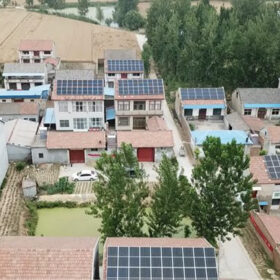
Grid shortages fuel China’s small-scale solar boom
Small-scale, “distributed” PV has become a significant part of the world’s biggest solar market but it is now butting up against the same grid constraints that have frustrated utility-scale PV in China and other parts of the world.

‘I was hired while on maternity leave’
This week, Women in Solar Europe (WiSEu) gives voice to Valentina Scaglione, Asset Management Director at Econergy Group. She says Companies should recognize and accommodate the specific needs of women, such as flexible work arrangements. “Prior to the COVID-19 pandemic, I was already working flexibly from home and the office, which positively impacted my well-being,” she states.
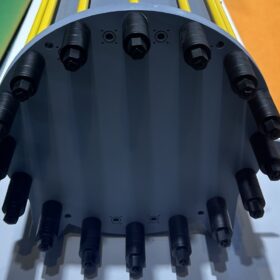
The Hydrogen Stream: Canada, Italy announce funds for hydrogen trade, infrastructure
Canada and Italy announced funds for hydrogen projects. Meanwhile, a team of researchers explained that Australia should ship hydrogen to Japan by 2030 via methyl cyclohexane (MCH) or liquid ammonia (LNH3), not completely rejecting the option of liquid hydrogen (LH2).
