
World now has five times more PV than nuclear power
Authors of the World Nuclear Industry Status Report 2024 the world had 408 operational reactors producing 367 GW in the middle of the year, which is significantly less than installed capacity predictions for solar by the end of the year and five time less the world’s cumulative PV capacity, which is now approaching 2 TW.

Ontario plans large-scale, competitive energy procurement
The government of the Canadian province of Ontario has directed the Independent Electricity System Operator (IESO) to finalize a design framework for a large-scale energy procurement exercise, which will include solar. It says that ground-mounted solar installations will be prohibited in prime agricultural areas.
Greek PV group urges halt to large-scale solar licenses amid curtailment
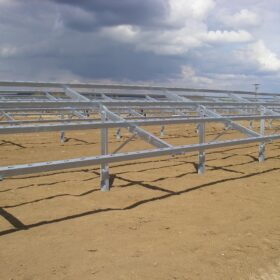
The Hellenic Association of Photovoltaic Energy Producers (Spef) is pushing the Greek government to stop issuing new grid connection licenses for renewable energy systems to address the nation’s escalating power curtailment issue.
Malaysia reaches 350 MW residential solar quota for net metering
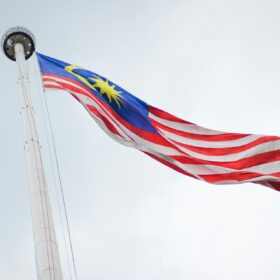
Malaysia’s Sustainable Energy Development Authority reports that the 350 MW capacity allocated for residential solar under the net metering initiative has been reached. However, capacity remains available for government buildings, as well as commercial and industrial users under the same scheme.

Hungary’s residential PV subsidy scheme draws 20,000 applicants
The Hungarian government says 20,000 households have signed up for its PV subsidies scheme, which offers up to HUF 5 million ($14,125) per home installation. The original HUF 75.8 billion budget was increased by HUF 30 billion in July.

China urges US to reverse new tariffs on solar, batteries, EVs
China’s Ministry of Commerce has described the Office of the US Trade Representative’s recent decision to raise tariffs on Chinese solar components, batteries, semiconductors, steel, and EVs as “typical unilateralism and protectionism.” It added that the tariff increases will harm US companies and consumers.

France’s 2021-23 PV auctions show price increase despite lower panel costs
The French energy regulator says in a new report that France allocated about 5.55 GW of PV capacity through its auction mechanism for large-scale solar between 2011 and 2013. Despite falling solar module prices, the auction mechanism did not lead to cheaper PV electricity or lower project costs.
End of net metering not a threat to residential solar profitability
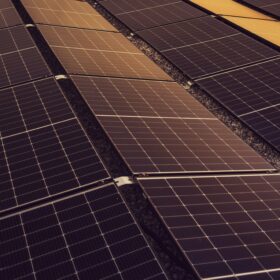
The Netherlands is preparing to end its net-metering scheme, prompting two Dutch research institutes to study the potential impact on PV system profitability. They found that increasing self-consumption rates from 30% to 60% would keep profitability levels stable.

U.S. increases and extends clean energy import tariffs on China
The U.S. Trade Representative decided that it will expand tariffs on solar components, batteries, semiconductors, steel, and EVs from China.
Addressing ESG in an ultra-low-cost environment
Shifting requirements for supply chain traceability and carbon footprint disclosure, along with solar oversupply and unsustainably low module prices, have made 2024 a challenging year for PV manufacturers. Despite these obstacles, the industry remains committed to its crucial role in the global energy transition. pv magazine recently spoke with Haimeng Zhang, chief strategy and environmental, social, and corporate governance (ESG) officer at Longi Green Energy, about how the sector is preparing to meet these challenges.
