
The solar support gap: Why do pro-solar citizens reject local projects?
Researchers from the University of Rhode Island explored why citizens who voiced pro-solar sentiments voted against a solar project development in a 2019 municipal referendum. Their analysis found objections over land use greatly outweigh proximity concerns.

Colombia approves guidelines for integrating energy storage into electricity system
The decree represents a shift in grid operations with storage seen as improving reliability and enabling higher renewable energy penetration.

Philippines registers solar module maker targeting EU export market
The Philippine Economic Zone Authority (PEZA) has formally registered Genuine Renewable Energy and Eco-Friendly Energy Network Corp. (GREEENC) as an ecozone enterprise to manufacture and export PV modules, with the European Union as the primary target market.

South Korea widens tax credits for low-carbon solar manufacturing
South Korea has extended investment tax credits to solar module manufacturing facilities meeting carbon footprint thresholds, in the latest step in a policy trajectory that increasingly uses procurement and tax measures to support domestic manufacturers.
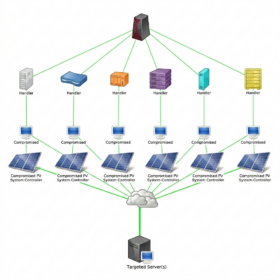
Cyber threats for PV: What are distributed denial-of-service attacks and how do they work
Denial-of-service attacks overwhelm networked systems with massive traffic from compromised devices, disrupting communication and making critical services like PV system monitoring and control unavailable. They can cause operational instability, reduced energy production, and safety risks, requiring layered defenses such as filtering, redundancy, and automated mitigation to maintain system resilience.
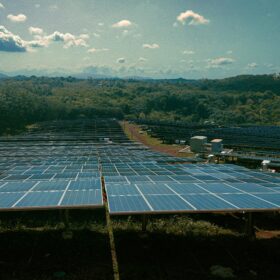
Italy PV grid connection requests reach 144 GW as ready-to-build pipeline grows to 9.34 GW
Italy recorded 3,670 PV connection applications totaling 144 GW amid a slight ongoing decline since August 2025, while ready-to-build projects rose to 210 or 9.34 GW, with capacity remaining concentrated in Sicily, Puglia and Sardinia.
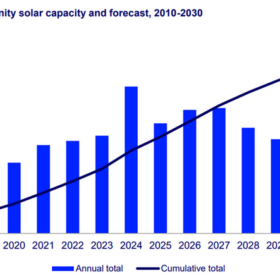
U.S. community solar passes 10 GW milestone despite market contraction
The country installed 1.4 GW in 2025, a drop from 2024 levels as leading markets like New York and Maine slowed.
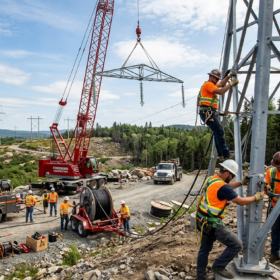
European power grid investment set to rise sharply by 2027
The EU Agency for the Cooperation of Energy Regulators (ACER) says distribution grid investment has risen 51% since 2021, but warns that fragmented planning rules and regulatory distortions could limit efficiency and slow the energy transition.

Free midday electricity key to drive consumer demand to match excess PV generation
Free midday electricity schemes aim to shift household demand into periods of high solar PV generation, reducing midday surplus and evening fossil-fuel ramp-up. Research on Australia’s Solar Sharer program suggests such incentives could significantly improve renewable utilization, but outcomes depend on consumer behaviour, load shifting, and rebound effects.

Tunisia launches 200 MW call for PV projects under new licensing scheme
The Tunisian government is inviting private developers to submit applications for solar power plants under the sixth licensing round for full electricity sale to national utility STEG.
