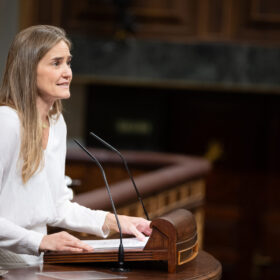
Spain approves new decree to accelerate storage and grid modernization
Spain’s Council of Ministers has approved a royal decree to promote energy storage, accelerate electrification, and tighten oversight of the national grid, says the Ministry for the Ecological Transition and Demographic Challenge (MITECO).
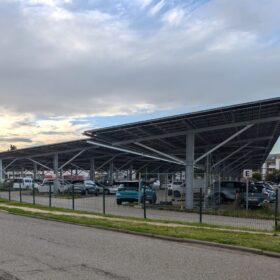
France concludes C&I rooftop PV tender with average price of €0.09648/kWh
The French authorities have concluded a commercial and industrial (C&I) rooftop PV tender with an average price of €0.09648 ($0.1108)/kWh. The government allocated 300.9 MW of PV capacity in total.

Morocco distributed solar potential pegged at 28.6 GW
Morocco could install up to 28.6 GW of distributed solar, producing 66.8 TWh of electricity and creating a $31 billion market, according to new research that calls for rapid regulatory action to unlock this potential.
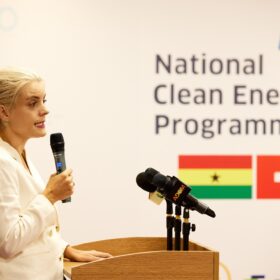
Ghana, Switzerland partner on $200 million rooftop solar rollout
Ghana’s new clean energy program, backed by Switzerland’s Klik Foundation, will install 4,000 rooftop systems totaling 137 MW to expand renewable capacity and cut emissions.
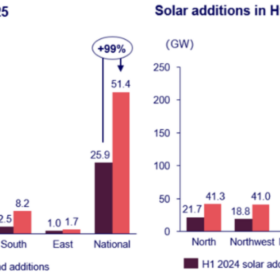
China’s new auction system drives steep solar price declines
Wood Mackenzie says first provincial auctions under China’s new pricing rules pushed solar bids up to 32% below settlement, signaling tighter margins and a shift to slower, more sustainable growth.
France revises off-peak hours to match solar generation patterns
French grid operator Enedis will shift off-peak hours to daytime periods to align power demand with rising solar output and reduce evening consumption peaks.

‘There really is a place for everyone in solar’
This week Women in Solar+ Europe gives voice to Rachel Hayes, the Head of the Environmental, Social, and Governance (ESG) team at Solar Energy UK. She says careers in solar often evolve laterally, from project development to ESG, from engineering to policy, reflecting how transferable and rewarding these roles are. “The challenge isn’t retention; it’s entry,” she states.

Ireland earmarks €27 million for energy communities
Ireland is investing close to €27 million ($31 million) in community-based energy projects promoting climate action, including small-scale solar installations around the country. A previous phase of the program allocated a total of €24 million to 650 community projects.

India solar module output to exceed 125 GW in 2025, says Wood Mackenzie
Wood Mackenzie says in a new report that India’s solar manufacturing boom risks overcapacity and calls for a shift from expansion to cost competitiveness.

Netherlands plans CfDs to replace large-scale solar subsidy in 2027
The Dutch government is preparing to phase out its Stimulation of Sustainable Energy Production and Climate Transition (SDE++) subsidy scheme for large-scale renewable projects and replace it with two-way contracts for difference (CfD), in line with EU market reforms.
