
‘Diversity and inclusion are not nice-to-haves, but essential ingredients for progress’
This week, Women in Solar+ Europe gives voice to Laura Riedl, Digital Marketing Manager at Solis. She says that the energy transition is inherently complex and multidimensional, which makes the diversity of perspective invaluable. “It helps uncover needs that might otherwise remain invisible and ensures that solutions are robust enough to serve broad communities,” she states.

Emeroo battery secures first approval under South Australia clean energy law
Potentia Energy’s 900 MWh Emeroo battery in South Australia is the first battery energy storage system (BESS) approved under the state’s Hydrogen and Renewable Energy Act.

France to cut VAT to 5.5% for residential solar under 9 kW from October
France will cut value-added tax (VAT) to 5.5% on residential PV systems up to 9 kW starting in October 2025.

Strongest year on record for UK solar generation as deployment accelerates
Generation data for the first half of 2025 shows a record start for solar, while new government capacity data points to accelerating deployment and larger installations.
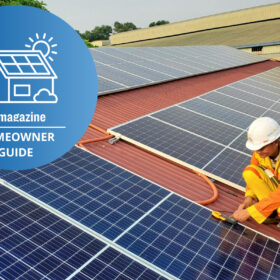
pv magazine Homeowner Guide: Sharing information with a solar installer
pv magazine is compiling a guide to home solar installations, aimed at those who are interested in installing but are new to the market and want to make an informed decision. We have spoken to associations, installers and industry specialists in major solar markets across the globe to compile best practice guidance and advice that aims to be applicable to home solar installations anywhere in the world.

Solar to add 13 GW in Brazil in 2025 amid signs of slowdown
Brazil is expected to add 13 GW of solar capacity in 2025, according to the Brazilian Photovoltaic Solar Energy Association (Absolar), but growth appears to be slowing as curtailment, grid constraints, and regulatory uncertainty challenge new projects.
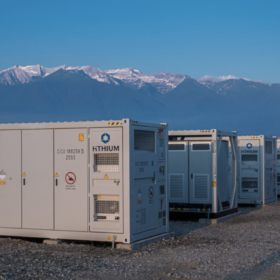
Bulgaria launches consultation on 1.9 GWh energy storage subsidy
The Bulgarian Ministry of Energy has opened a public consultation for a new round targeting 1.9 GWh of standalone storage capacity, building on the success of its initial RESTORE procurement, which backed nearly 10 GWh of energy storage development.
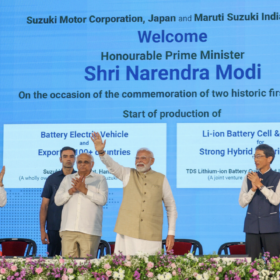
Suzuki venture starts electrode output in India
Japan’s Toshiba, Denso and Suzuki have launched local lithium battery cell and electrode production in India through their TDSG venture, supplying hybrid and electric vehicles for global markets.
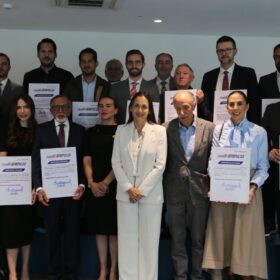
Ecuador authorizes 643 MW of distributed energy projects
Ecuador’s Ministry of Environment and Energy has authorized private companies to develop 643 MW of renewable energy projects across the country.
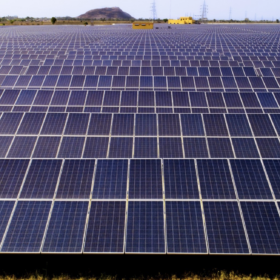
India installs 18 GW of solar in H1 2025
India installed 18 GW of solar in the first half of 2025, a 31% increase from a year earlier, with 11.3 GW commissioned in the second quarter alone, according to Mercom India Research.
