
Financial guarantee unlocks 109 MW for renewables in Moldova
Moldova’s government says developers have returned 30 grid connection permits for renewable energy projects since it introduced a financial guarantee scheme aimed at freeing up network capacity for viable investments.

Australia grants major project status to 6 GW power export plan
SunCable has welcomed the Australian federal government’s decision to renew major project status for its Australia-Asia PowerLink, which aims to deliver up to 6 GW of renewable power from the Northern Territory to industries and urban centers in Darwin and Singapore.

Italy launches floating PV tender
The Italian authorities have opened a tender to support the deployment of about 50 MW of floating PV capacity.
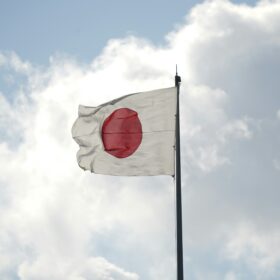
Japan’s 24th solar auction concludes with average final price of $0.028/kWh
Japan has allocated 79 MW of PV capacity in its latest procurement exercise. The highest price in the auction was JPY 7.79 ($0.054) /kWh.

Researchers identify optimal level of solar, battery storage for European energy market
Researchers in Hungary have developed a model to calculate the optimal PV and battery storage balance to support the European grid in the next few years. They found that the cost-optimal range is at 530–880 GW of PV, combined with battery storage equivalent to 2.5–7.5% of the total intermittent capacity.
China moves to curb solar overcapacity, stabilize pricing
China’s top industry officials have vowed to curb low-price competition and excess capacity in the solar sector, as authorities begin implementing measures aimed at stabilizing supply chains and rebalancing the market.
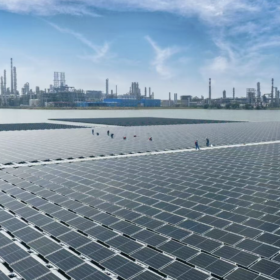
Sinopec launches China’s first commercial offshore floating PV project
Sinopec has commissioned a 7.5 MW offshore floating solar project in full seawater conditions in China.

SolarPower Europe maps EU solar tracker supply chain
SolarPower Europe has underscored the role of domestic mounting system manufacturers in driving PV deployment across Europe, while calling for the adoption of international customs codes, stricter quality standards, and the inclusion of fixed-tilt racking systems in national resilience technology lists under the EU Net-Zero Industry Act (NZIA).

‘In engineering, women remain markedly underrepresented’
This week Women in Solar+ Europe gives voice to Maria Ardila, construction engineer at UK-based Cubico Sustainable Investments. She says that progress remains slow in the energy industry because gender matters are often viewed as personal choices rather than the systemic issues they truly are. “Until society challenges the outdated norms and organizational structures that penalize mothers, meaningful advancement toward gender equity in leadership will continue to be constrained,” she states.
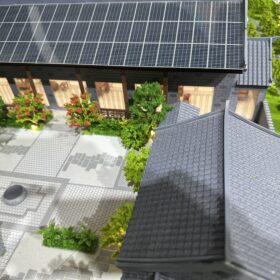
Eastern European prosumers acting in ‘energy self-defense’
New research on the PV markets of the four countries forming the so-called Visegrad Group has confirmed that solar prosumers are driven primarily by economic interests rather than environmental concerns. The scientists coined the concept of “energy self-defense” to define all those behaviors that push homeowners to resort to PV in attempt to address price shocks.
