
Ahaan Solar to start 600 MW TOPCon module factory by mid-2025
Ahaan Solar, part of Airox Nigen Equipments, plans to start production from the first 600 MW phase of its 2 GW solar module factory in Haryana, India, by mid-2025. The facility will use tunnel oxide passivated contact (TOPCon) technology to produce high-efficiency modules for domestic and export markets.
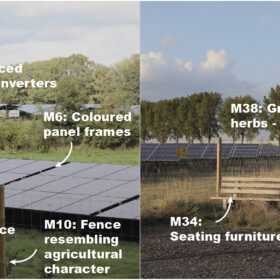
Ecological impact of ground-mounted PV depends on previous land use
Researchers in the Netherlands have identified all major solar power plants in the Dutch Province of Gelderland and have analyzed all of their spatial measures in an effort to assess their impact on landscape. They have specifically focused on land use competition, biodiversity, and landscape experience.

Panama to include storage in energy auctions
In an exclusive interview with pv magazine, Panamanian Energy Secretary Juan Manuel Urriola said the government will open the electricity market to private investment and revise regulations to enable energy storage. Urriola also emphasized the importance of long-term planning and transparent bidding to attract developers.

UK energy sector edging toward gender balance, but barriers remain
Women in Solar+ Europe – WiSEu Network attended the launch of POWERful Women’s Annual State of the Nation Report this week, where leaders and changemakers called for faster action to close the gender gap in energy.

Nicaragua starts work on 70 MW solar plant, largest to date
China Communications Construction Co. has begun building the 70 MW Enesolar-3 solar plant in Nicaragua, which will supply power to state water utility Enacal and cover about 40% of its electricity needs. The PV project is the largest in the country to date.

DEWA’s Mohammed bin Rashid solar park capacity hits 3.8 GW
Dubai Electricity and Water Authority (DEWA) says it has added 800 MW of solar to its flagship Mohammed bin Rashid Al Maktoum Solar Park this year alone. By the end of the decade, the site’s cumulative capacity is set to reach 7.26 GW.

Solar companies adapt in changing times
pv magazine USA speaks with Solar Insure’s Dean Chiaravallotti about how solar companies can adapt business models, innovate product offerings, and deploy strategic tools to remain competitive in a shifting US market.

Global renewable energy pathfinding
Australia is tracking towards 75% electricity from solar and wind in 2030, which makes it a global energy transition pathfinder. Pathfinders are important because they learn to solve new problems and disprove misinformation and disinformation.
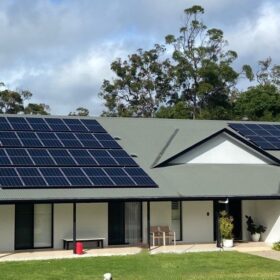
Cost of living, government rebates accelerate Australia’s solar and battery booms
Recent studies forecast Australia is on the precipice of a rooftop solar and household battery boom, predicting record breaking installation numbers driven by falling battery and solar module prices, government rebates and cost-of-living pressures.

Green hydrogen remains ‘prohibitively’ expensive in Africa
A European research team has assessed the levelized cost of hydrogen across 31 African countries and has concluded that importing green hydrogen from Africa to European is economically unfeasible by 2030, with prices ranging from $10.2/kg to $3.8/kg.
