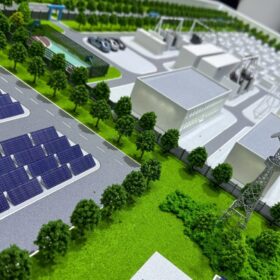
Zimbabwean telecom company opens solar-storage tender
TelOne Zimbabwe says it is seeking bids to finance and deploy solar and lithium-ion storage projects at its exchange sites.

Serbia awards 645 MW in second renewables auction
Serbia has allocated 645 MW across 10 wind and solar projects in its second renewables auction, setting average prices at €0.0509 ($0.0533)/kWh for solar and €0.0535/kWh for wind. The government said the rates are well below market levels.

EU unveils Clean Industrial Deal to improve competitiveness, cut emissions
The European Commission has launched the Clean Industrial Deal, a plan to boost industrial competitiveness and accelerate decarbonization. The initiative aims to lower energy costs, support clean technology, and streamline regulations amid high energy prices and global competition.

Greece presents 3.5 GW standalone battery storage rollout plan
A draft ministerial decision envisages the installation of 3.55 GW of standalone battery energy storage systems which will be granted priority connection to the transmission or distribution grid and operated on a merchant basis without subsidy support.
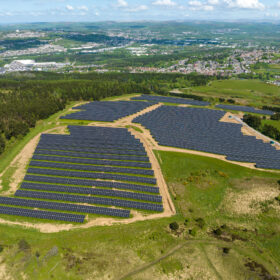
Innova signs 40-year PPA for solar projects in Wales
Two solar and storage projects in development near Wrexham, North Wales, will supply power to a nearby sewage treatment works. Construction work on both sites is due to “commence shortly,” according to the developer.

Ecuador could host floating PV facilities at 11 hydropower plants
An international team has researched the potential to deploy floating photovoltaics at hydroelectric stations in Ecuador, finding 11 out of 70 sites that could host at least 15 MW up to 200 MW.

Taiwan proposes rooftop PV mandate for big buildings
The Taiwanese government says that under a new policy proposal, new buildings and renovations above 1,000 square meters would need to install solar panels. The authorities claim that the rules could take effect after a public consultation period.
Israel targeting 100,000 new solar rooftops by 2030
Israel’s Ministry of Energy and Infrastructure says its 100,000 Solar Roofs Program aims to add 1.6 GW of new solar capacity by 2030.

Moldova mandates returnable financial guarantee for future connection permits
Renewable energy developers in Moldova must now provide financial guarantees when applying for grid connection permits. The guarantees are refundable if projects become operational within agreed time frames.

Switzerland expands rules for rooftop solar, storage, energy communities
Switzerland is expanding rules for rooftop solar, energy storage, and energy communities to expand self-consumption and ease pressure on the grid. The new regulations, set to take effect in 2026, introduce updated tariffs, encourage battery storage, and allow local electricity trading.
