
IEA-PVPS calls for harmonized testing, certification for building-integrated photovoltaics
The latest report from the International Energy Agency’s (IEA) Photovoltaic Power Systems Programme (PVPS) says the building-integrated photovoltaics (BIPV) industry is facing significant challenges due to a lack of clear testing and certification procedures. It says international consensus and the harmonization of certification processes will be crucial for widespread adoption of the technology.

Solar advances across MENA region
The fossil fuel rich Middle East and North Africa (MENA) region faces mounting pressure to diversify its energy mix. While solar is cheap, it faces significant sociopolitical and economic challenges.

EU solar installations hit 65.5 GW in 2024, says SolarPower Europe
Solar installations grew 4% year on year in the European Union in 2024, down sharply from 53% growth in 2023. The slowdown coincides with a decline in solar investment, marking the first such drop this decade. SolarPower Europe now forecasts annual growth of 3% to 7% in solar installations from 2025 to 2028.

Romania allocates 432 MW of PV at average price of €0.051/kWh in first renewables auction
The Romanian authorities have allocated 1.52 GW of renewable energy capacity in a procurement exercise, with the lowest bid for PV technology at €0.045 ($0.047)/kWh.

India to mandate energy storage for solar, wind projects
India is likely to follow in the footsteps of China and mandate the inclusion of battery storage capacity for future wind and solar energy projects.
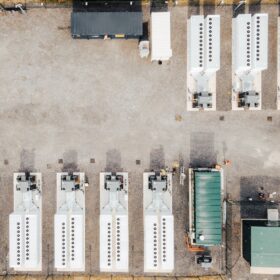
UK plans for 23 GW battery storage fleet by 2030
Clean Power 2030 plan unveiled by UK government includes key role for battery energy storage systems (BESS) in providing short-term flexibility. Support for long-duration energy storage (LDES) and changes to standing charges for behind the meter storage also proposed.
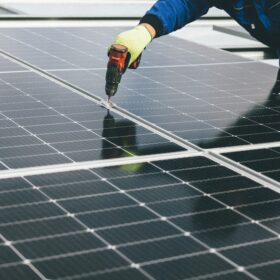
UK solar industry must transition to circular economy, says NICER
The National Interdisciplinary Circular Economy Research (NICER) program says in a new report that the UK solar industry could generate 1.2 million tons of waste by 2050. It calls for circular economy measures to meet net-zero and solar deployment targets.

Montenegro to launch 300 MWh battery storage tender
Montenegro’s Elektroprivreda Crne Gore (EPCG) has upped the ante for its first battery energy storage tender.

ESMC publishes recommendations for restoring Europe’s solar industry
The European Solar Manufacturing Council’s (ESMC) working group has issued a recommendation paper praising the Net-Zero Industry Act (NZIA), but says clearer and stronger support is needed for European solar production.
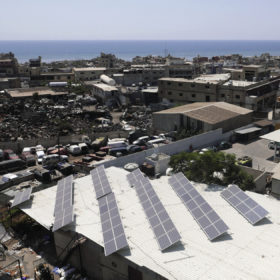
Israeli strikes destroy 150-200 MW of solar in Lebanon
Israel’s recent strikes have reportedly destroyed or damaged 400,000 to 500,000 solar panels, costing Lebanon an estimated 150 MW to 200 MW of installed solar capacity, according to Pierre El Khoury, former director and president of the Lebanese Center for Energy Conservation (LCEC).
