
‘Closing the gender gap is not just an ethical imperative but also a strategic one’
This week, Women in Solar Europe (WiSEu) gives voice to Ines Monroy, founder of Spain-based Licenciasocial.energy. She says the global renewable energy industry should be prepared to adress the so-called authority gap. “When I’ve adopted a neutral, professional tone to convey directives or focus on problem-solving, I’ve been met with comments suggesting that my approach was ‘bossy’ or ‘too harsh.’ My impression is that this reaction stems from ingrained stereotypes that expect women to be overly accommodating, even in roles where decisiveness and objectivity are critical,” she states.

‘High electricity prices in California have nothing to do with renewables’
Stanford University professor Mark Z. Jacobson spoke to pv magazine about recent research work showing that California could easily rely on a wind-water-solar-dominated large grid. He says the state’s current electricity prices are high because of several reasons that have nothing to do with renewables. These include high fossil gas prices and the cost upgrading aging transmission and distribution lines, among others.
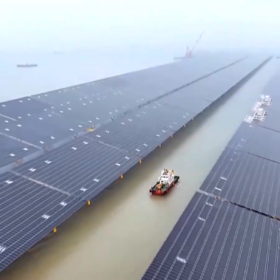
China’s Jiangsu province launches 27.3 GW offshore solar plan
The authorities in China’s Jiangsu province have launched an offshore solar development plan (2025-30), targeting 27.25 GW from 60 projects. The plan aims to connect 10 GW of offshore solar to the grid by 2027, with a goal of up to 20 GW by 2030.
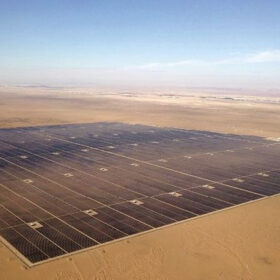
Saudi Arabia announces prequalified bidders for 2 GW/8 GWh battery storage tender
The Saudi Power Procurement Company has announced its list of 33 prequalified biders for its massive 2 GW/8 GWh BESS tender.

Curtailing solar photovoltaics is here to stay, overbuilding PV will become normal
As the penetration of variable renewable energy increases, curtailment of solar PV generation will only increase. Since curtailment will almost always be cheaper than investing in new transmission capacity or new grid-scale storage, curtailed energy should be rewarded, so that PV investment decisions can include curtailment as one of the flexibility options for grid operators.

NTPC allocates 1.2 GW of wind-solar hybrid capacity in India at $0.040/kWh
Adani Renewable Energy, Adyant Enersol (Datta Infra), Ampin Energy, Green Prairie Energy (EverGreen Power) and JSP Green (Jindal Renewables) have won in NTPC’s latest auction for 1.2 GW of wind-solar hybrid capacity in India.
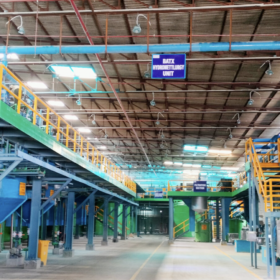
BatX Energies opens lithium battery recycling plant in India
BatX Energies says it has opened a lithium battery recycling facility in India to extract critical materials using a hydrometallurgical process.
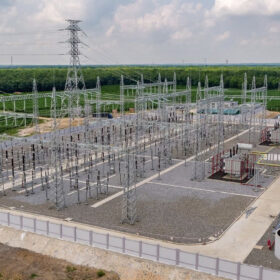
A tumultuous year for solar and batteries
In five key trends, pv magazine looks back over a year that saw PV module prices fall lower than many thought possible, while demand was restrained by grid congestion, among other challenges. Energy storage has had a strong year and geopolitics is seeing solar and battery manufacturing enter new regions as competition drives technical innovation.
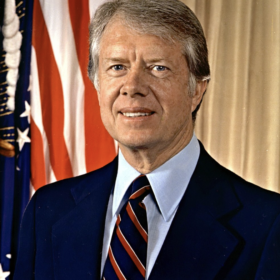
Jimmy Carter’s clean energy legacy
The world has lost a forward-thinking clean energy proponent, who 44 years ago recommended a solar strategy to move the United States toward energy security by using abundant, clean energy sources.
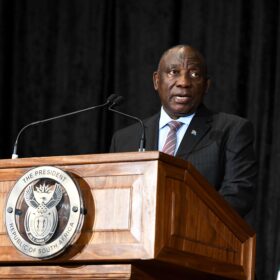
South Africa picks bidders for 1.76 GW of solar, battery projects
The South African government has named preferred bidders for 16 renewable energy projects, totaling ZAR 44.2 billion ($2.4 billion) in investments, to drive solar and battery development.
