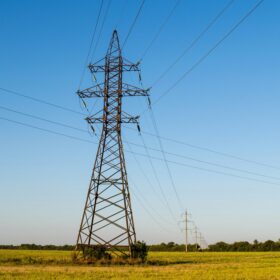
New Zealand’s grid operator finds emerging energy gap in early 2030s
Transpower’s latest assessment of New Zealand’s balance between electricity supply and demand suggests an energy gap could emerge in the early 2030s, even if all committed and likely investments are delivered without delay.

Australia’s energy commission targets lower solar curtailment
Australia’s Energy Market Commission says introducing a new distribution planning framework and undertaking enhanced data reporting will help to reduce rooftop solar curtailment.
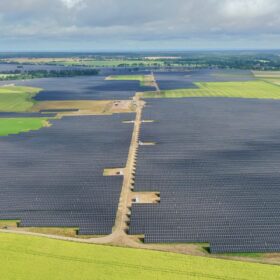
First PV plant operating in Poland’s balancing market
The 204 MW Zwartowo solar power plant is the first large-scale solar project authorized to provide balancing services in Poland.

Maldives’ largest floating solar array goes online
Swimsol says the 2.4 MW floating PV array will supply the resort island of Cheval Blanc Randheli, reducing diesel consumption and saving about $1.5 million in fuel costs. The company’s engineering team told pv magazine how the system will operate.

How to operate PV-driven residential heat pumps under time-varying tariffs
Researchers in the United Kingdom developed a scheduling model for residential heat pumps that reduces electricity costs while maintaining thermal comfort under dynamic tariffs and uncertain rooftop PV generation. It optimizes when to use grid power, PV energy, and building thermal storage.

Jinko Power enters data center business with 1 GW project in China
Jinko Power signed a framework agreement with Zhongwei to develop a 1 GW data center in Ningxia, marking its entry into green computing under China’s “Eastern Data, Western Computing” initiative. The project, however, remains subject to approvals and funding scrutiny.
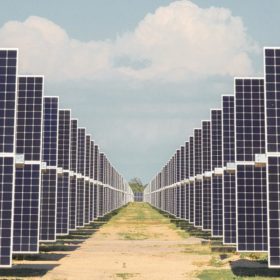
Negative power prices reach all-time high on the Iberian Peninsula in Q1
Spain and Portugal recorded a surge in negative electricity prices in Q1, driven by strong solar generation and relatively low demand on the Iberian Peninsula. Further records are likely in 2026 as solar capacity grows, with more frequent price volatility expected across Europe.
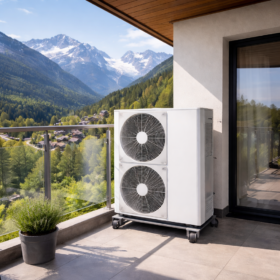
Could global warming improve heat pump efficiency in Alpine regions?
Researchers in Italy analyzed air-to-water heat pump performance in Alpine regions, focusing on how start-up and defrost cycles affect efficiency under current and future climate conditions. Their simulations show that while warmer temperatures slightly reduce defrosting losses and modestly improve efficiency, start-up cycling losses remain significant and continue to limit overall performance gains.
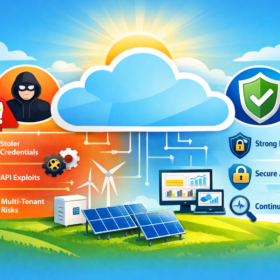
Cyber threats for PV: What are cloud platform and software-as-a-service exploitation attacks and how do they work
Cloud and SaaS platforms are now central to PV plant operations, but their centralization creates a high-impact cybersecurity risk where a single compromise can expose or disrupt entire fleets of installations. Attackers exploit weaknesses like stolen credentials, insecure APIs, multi-tenant flaws, and platform vulnerabilities, making strong identity controls, secure APIs, and continuous monitoring essential defenses.

Cyber threats for PV: What are supply chain attacks and how do they work
Supply chain attacks compromise PV systems by targeting trusted vendors, software, or hardware components, allowing attackers to infiltrate systems indirectly through legitimate channels. These attacks can disrupt operations, introduce hidden vulnerabilities, and impact multiple assets at once, making vendor security and system validation critical for resilience.
