
Low-temperature solar cell interconnection tech based on conductive coated wires
Solyco is developing a new low-temperature technology for the interconnection of solar cells. It consists of a round copper core with a diameter of 280 μm that is covered by a very thin layer of silver for corrosion protection and then surrounded by a 40 μm coating of an electrically conductive thermoplastic.
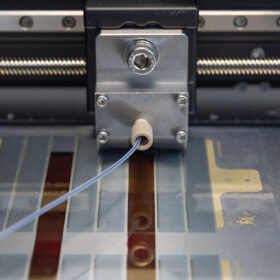
InfinityPV unveils slot die coater for thin-film PV research
The customizable, compact sheet coater supports coating speeds from 1.2 mm/sec up to 33 mm/sec.

Determining mismatch losses in bifacial PV based on single-axis trackers
Scientists in Spain have proposed a novel way to calculate the structure shading factor and mismatch losses for the rear side of bifacial PV modules using one-axis trackers. They tested the new methodology in a real PV system and found it is able to establish a linear fit based on distance from the torque tube.
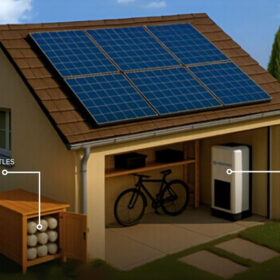
Segula presents compressed air storage system for residential applications
The system consists of a reversible compressor connected to a storage unit that can be installed indoors or outdoors. The compressor must be connected to the solar panels, with the whole system being controlled by an application that optimizes self-consumption.

FuturaSun releases 390 W silver solar panel
The Italian manufacturer said the new version of its silver module is ideal for grey roofs and buildings with modern architecture. It uses a 3.2 mm silver-coated glass and features a power conversion efficiency of 19.52%.
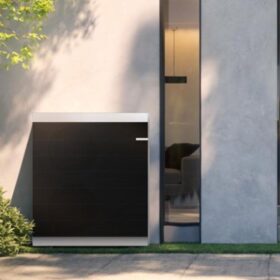
Amitime unveils residential propane heat pump
The Chinese manufacturer said its new heat pump system can continuously and stably provide hot water up to 75 C. At a temperature between 35 C and 55 C, the new product can reportedly achieve a seasonal coefficient of performance (SCOP) of 4.6 to 5.23, with COP values ranging from 3.86 to 5.63.

Korean researchers achieve world record efficiency of 23.64% for flexible perovskite-CIGS tandem solar cell
Scientists at the Korea Institute of Energy Research claim to have achieved the highest efficiency ever reported for a perovskite-CIGS tandem solar cell with flexible, lightweight architecture. The device was also found to achieve “excellent” durability.

Trina debuts 5 MWh energy storage system
The Chinese manufacturer said its new utility-scale battery uses 314 Ah cells with a 15,000-cycle lifespan.

Scientists testing perovskite-silicon tandem solar cells with interdigitated back contacts
A research team in Iran has designed a four-terminal perovskite-silicon tandem solar cells with a 19.3%-efficient bottom heterojunction cell and a 12.7%-efficient perovskite top cell. Both subcells were conceived to have interdigitated back contacts, with the top cell reportedly helping to improve the tandem device’s light-trapping and efficiency.

Oxford PV, Trina Solar enter patent licensing agreement for perovskite-silicon tandem solar
The exclusive license agreement covers the manufacture or sale of perovskite PV products for the Chinese market. A statement from Oxford PV says the agreement “underscores the industry consensus that perovskite-based PV technologies are the future of solar.”
