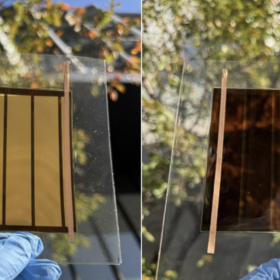
Scientists unveil durable perovskite PV modules with carbon nanotube electrode
Japanese researchers have engineered a 100 cm² perovskite solar cell module featuring a robust single-walled carbon nanotube (CNT) electrode to improve durability and enable dual-sided light absorption.
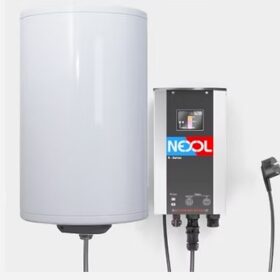
Nexol Photovolthermic launches new PV water heater
Nexol Photovolthermic AG has developed a new hybrid solar water heater for residential use, offering 1.5 kW of heating output and sizes ranging from 80 to 300 liters.
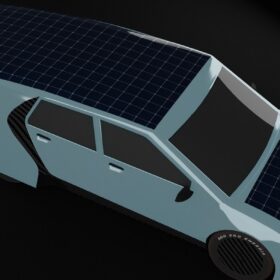
Back-contact VIPV modules based on glass fiber-reinforced composite sheets
A university team in Poland has developed lightweight bifacial vehicle integrated PV (VIPV) mini-modules with back contact cells and glass fiber-reinforced composite sheets. Fabricated in a low-cost process, larger versions of the device are planned for use in a custom-built solar car for international competitions.

How to identify interruption of ribbons in solar modules
Scientists in Spain have investigated the total or partial interruptions of ribbons that connect solar cells in modules and have proposed a classification based on their type and location.
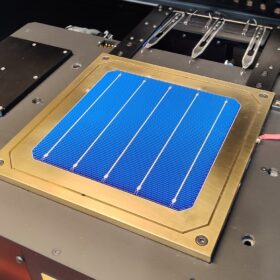
Dielectric capping layers improve heterojunction solar module reliability
A research group from France claims to have found a way to reduce indium consumption in heterojunction solar modules by 85 % while maintaining good performances and durability levels. The scientists tested different cell designs and the use of several capping layers to protect the cell from moisture degradation.

Lenovo unveils solar laptop with integrated PV panel
This is a proof-of-concept 1.22 kg laptop with a solar panel integrated into the lid, capable of absorbing enough sunlight in 20 minutes to power the device’s video for an hour.
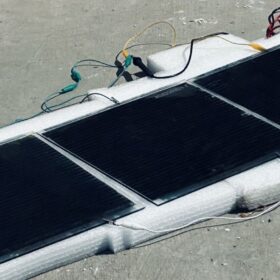
Indian startup testing 15%-efficient perovskite solar modules
P3C Technology and Solutions plans to initially produce the 30 cm2 modules at a pilot 60 MW manufacturing facility.
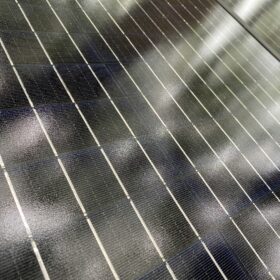
Tilt angle has greatest impact on power losses caused by soiling
Scientists in China have analyzed the impact of soiling of PV module performance and have found that tilt angle has the greatest impact, followed by irradiance intensity and dust deposition density.

Testing photovoltaic modules in Antarctica’s summer
The Turkish Antarctic Expedition placed four different PV module types – monocrystalline, polycrystalline, flexible and transparent – outside of their research camp for three months to compare performance, finding that monocrystalline was the clear winner.

Unlimited energy storage in Europe
Most studies of European 100% renewable energy overlook pumped-hydro energy storage (PHES), for the following, incorrect, reasons: there are few PHES sites; more dams on rivers are required; large areas of land are flooded; large amounts of water are required; there is a heavy environmental cost; and the capital cost of PHES is high. All these perceptions are wrong.
