
Novel MPPT tech based on salp swarm, hill climbing algorithms
Researchers have suggested to use a hybrid version of the so-called salp swarm algorithm (SSA) algorithm for maximum power point tracking in PV systems operating under highly fluctuating environmental conditions. The novel method also integrates the hill climbing algorithm, which simulates the process of climbing a mountain and reportedly helps find the best possible solution to a given problem.

Vertical rooftop PV performs better than conventional rooftop solar under the snow
A case study analysis by Norway’s Over Easy Solar has found that vertical rooftop solar panels outperform conventional rooftop PV systems during snowy months. Energy yield was up to 30% higher in the winter months in Norway, according to the company.
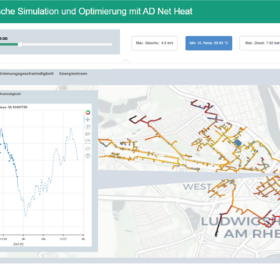
New simulation tool maps existing, planned district heating networks
Researchers in Germany have developed a simulation software tool that visualizes heat flows in existing district heating networks and is capable of predicting load peaks. It can also be used to help plan and commission new grids.

GCL SI enters back contact business with 660 W solar module
Chinese module maker GCL SI has expanded into back contact (BC) solar cell production with its first 660 W BC module, featuring tunnel oxide passivated contact (TOPCon) technology.

The impact of wildfires on PV power generation
Scientists have quantified the impact of wildfires on the availability of direct normal irradiance and global horizontal irradiance at the state, regional, and national levels in the United States. They have found that direct irradiance is more sensitive to smoke than the PV-relevant global horizontal irradiance.
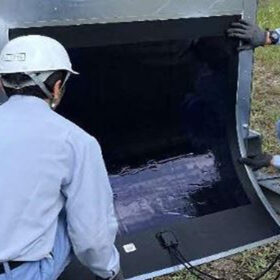
Japanese railway operator testing perovskite solar on noise barriers
Central Japan Railway Co. and Sekisui Chemical have revealed plans to deploy flexible perovskite-based PV systems along the Tokaido Shinkansen train line in Japan. They are using thin, lightweight, flexible film-type perovskite solar cells.
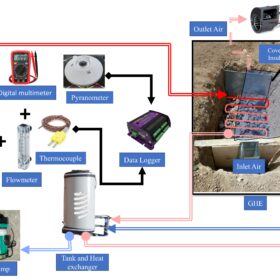
Storing photovoltaic-thermal energy with volcanic tuff stones
Scientists in China have used ground heat exchangers based on volcanic tuff stones to improve storage capabilities and efficiency of photovoltaic-thermal systems. Their experiments showed that the proposed combination effectively improves PV module cooling and thermal efficiency.

California winery installs solar with dual-axis tracking
A winery California will cover 95% of its electricity needs with a solar array that tilts on two axes to follow direct sunlight through the day.

Trina Solar sets world record for solar module efficiency at 25.44%
Trina Solar has set a world record for solar module efficiency at 25.44%, verified independently by the CalLab at Fraunhofer ISE.

JinkoSolar claims 33.84% efficiency for perovskite-silicon tandem solar cell
The result was confirmed by the Shanghai Institute of Microsystem and Information Technology under the Chinese Academy of Sciences (CAS).
