
Mercedes-Benz factory in Germany to host 11 MWh organic flow battery
A Mercedes-Benz factory in Germany is set to host an 11 MWh organic flow battery to store solar energy generated by its rooftop PV installation. Germany’s CMBlu has provided its Organic SolidFlow technology for the project.
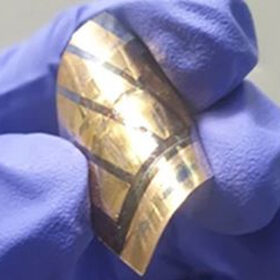
Perovskite quantum dot solar cell achieves record-breaking efficiency of 12.70%
Conceived by South Korean scientists, the cell was built with an electron transport layer made of tin oxide via a low-temperature process. The device reportedly achieved the highest power conversion efficiency ever reported for flexible quantum dot solar cells.
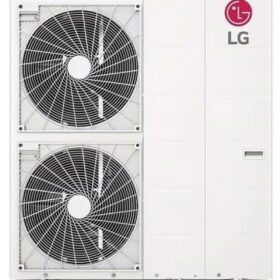
LG presents residential air-to-water heat pump
The system uses difluoromethane (R32) as the refrigerant and has reportedly a seasonal coefficient of performance of up to 4.69.
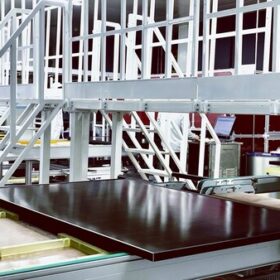
Astronergy presents TOPCon busbarless solar modules with 23% efficiency
The Chinese module manufacturer announced the first shipments of its new ASTRO N7s ZBB-TF modules to Europe. The product has a power output of up to 460 W and a temperature coefficient of -0.29% per C.
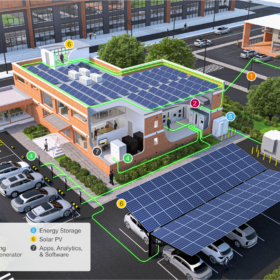
Schneider Electric, Mainspring offer multi-fuel microgrid solution
Schneider Electric’s EcoStruxure Microgrid Solution can be paired with Mainspring Energy’s Linear Generator to produce and store carbon-free energy for continuous use.
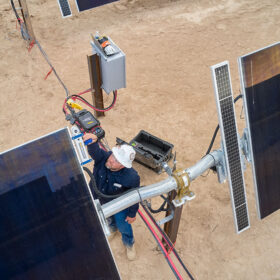
Fluke introduces I-V curve tracer for utility-scale solar industry
By adding the PVA-1500 Series I-V curve tracer to its portfolio, Fluke now offers tools for solar professionals servicing everything from distributed-generation arrays to utility-scale projects.
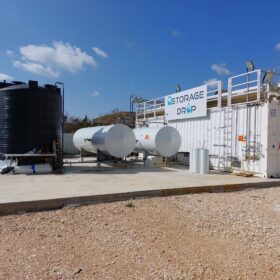
Israeli startup develops PV-driven cooling system based on compressed air
Storage Drop has secured a grant from the European Union to develop its PV-driven cooling system technology for low temperature environments. The system is based on compressed air energy storage technology and a hydraulic isothermal compressor with a water pump that compresses the air in an isothermal process.
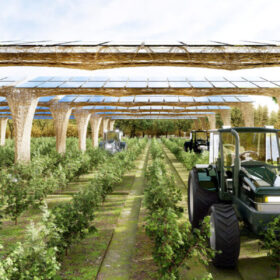
Agro Solar Europe unveils agrivoltaic mounting kit with organic materials
Agro Solar Europe has developed an agrivoltaic mounting structure made with organic materials, featuring a design that weighs 90% less than common steel structures. The Germany company has used raw materials such as flax, carbon, and wood fiber.
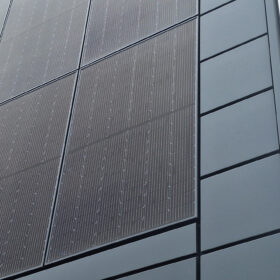
Fischer launches clamp-free fastening system for facade PV systems
Fischer has developed a clamp-free fastening system for facade PV systems, with a mounting solution that requires minimal gaps between modules. The company says it is simple to install and dismantle.

New model to calculate energy yield in east-west vertical bifacial PV plants
A Dutch research team has created a new approach to simulate the performance of vertical bifacial photovoltaic farms. The novel methodology considers design parameters and energy market conditions.
