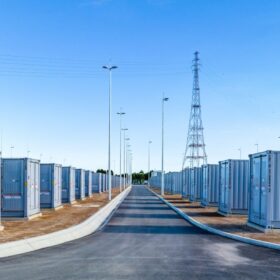
Australian utility tests nickel-hydrogen battery
Australian energy giant AGL will install a nickel-hydrogen battery at its Torrens Island power station site in South Australia as it explores the potential opportunities that the technology could provide for stationary energy storage applications
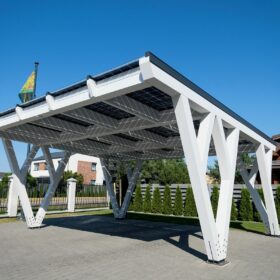
Solitek launches solar carport for residential, commercial applications
Lithuania-based Solitek has launched a carport product line featuring 370 W glass-glass frameless modules. It is designed to withstand a snow load of up to 2.5 kN/m2 and 27m/s of wind loads.
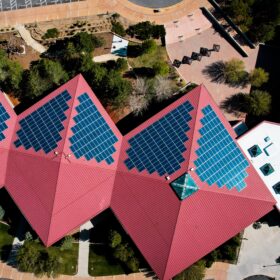
Scientists unveil tool to calculate feed-in, net metering tariffs in residential PV linked to storage
Developed by researchers in China, the novel calculator uses current and voltage sensors, a Raspberry Pi, and an algorithm for fuzzy logic to determine variations in frequency and demand. The tool sends Email notifications with the tariff values to the PV system owners.
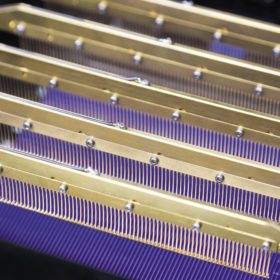
Weekend Read: Connecting HJT
The application of busbarless cell interconnection approaches could unlock the potential of heterojunction (HJT) technology, primarily by reducing the historically high silver usage of negatively-doped, “n-type” cell technology. As HJT manufacturing increases, a wave of applications may very well be on the horizon.
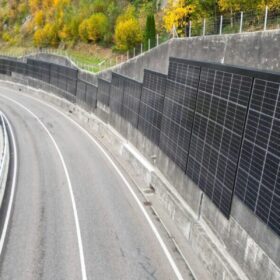
Swiss consortium switches on 325 kW vertical PV system on retaining wall
K2 Systems and Solarmotion deployed the vertical array on a retaining wall along a car road in the Swiss canton of Appenzell Ausserhoden. The system utilizes 756 glass-glass modules and is operating under Switzerland’s feed-in tariff program.
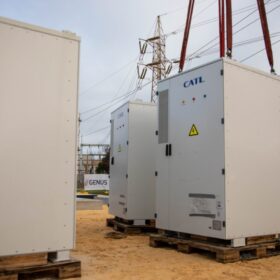
CATL: Staying on top of the battery game
For the seventh year in the row, China-based Contemporary Amperex Technology Co. (CATL) looks set to claim the title of the world’s biggest battery maker. There are a number of reasons why it continues to maintain its lead in the electric vehicle (EV) and battery energy storage system (BESS) markets..
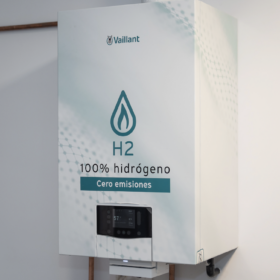
Spanish gas provider tests hydrogen-powered residential water heater tech
Madrileña Red de Gas is testing a heating system prototype developed by Germany company Vaillant that uses exclusively green hydrogen. The 25 kW system is equivalent in shape and size to a current natural gas heating system.
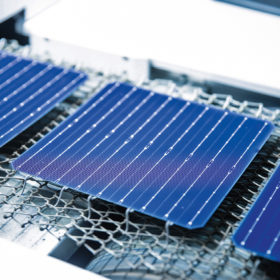
LeTID minimal issue for gallium-doped Czochralski silicon PERC products
Scientists from Trina Solar, Longi, Fraunhofer ISE, and other entities have looked at light and elevated temperature-induced degradation (LeTID) in gallium-doped Czochralski silicon (Cz-Si:Ga) PERC cells. They have found little relevant degradation.
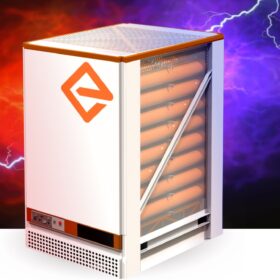
EnerVenue offers pre-assembled nickel-hydrogen battery vessels
The stationary energy storage solution includes nickel-hydrogen batteries, the battery management system and cabling.
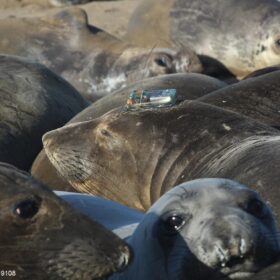
Photovoltaics for marine wildlife telemetry devices
A US research team has tested mini solar modules in marine data collection devices, using animal hosts for water column profile measurements. The findings suggest that submarine PV can effectively operate in these applications at depths of up to 22 meters.
