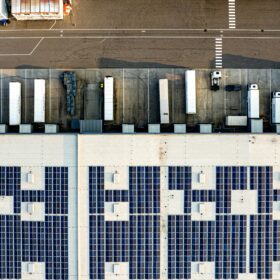
Survey reveals PV systems in Germany outperform lifespan expectations
Researchers analyzed 16 years of data from over 1 million PV systems in Germany and found annual degradation is just 0.52–0.61%, roughly half prior estimates. Environmental factors like heat, frost, and air pollution affect performance, while smaller systems degrade less than larger ones, boosting long-term reliability and profitability.
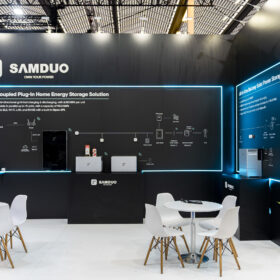
Samduo launches residential AC-coupled plug-in storage systems
The Chinese manufacturer said its new Nex E6000 and Nex E6000H storage systems combine a 6 kWh battery, an inverter, and an integrated energy management system, with scalable design allowing multiple units to be networked for higher capacity and coordinated energy sharing.
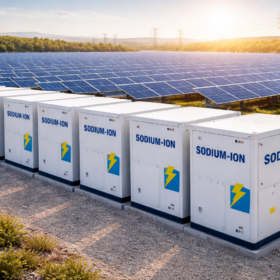
2D carbon selenide offers route to competitive sodium-ion batteries
Researchers at TU Delft propose using 2D carbon selenide as a sodium-ion battery anode, offering a theoretical capacity of 589 mAh/g with minimal volume expansion. Computational studies confirmed the material’s structural and thermal stability, as well as tunable electrochemical properties, making it a promising candidate for large-scale, renewable-linked energy storage.
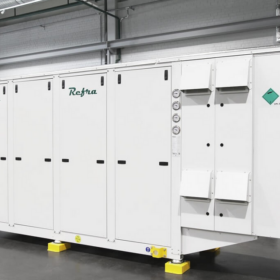
Refra debuts water-to-water heat pump for commercial, industrial use
Lithuania-based Refra has launched its Oasis series of water-to-water heat pumps and chillers, offering capacities from 34 kW to 600 kW for small to large commercial and industrial applications. Featuring propane refrigerant, inverter-controlled compressors, and modular multi-circuit design, the units can reach a coefficient of performance of up to 5.1.
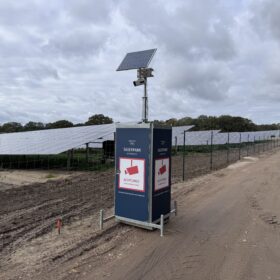
How EU NIS2 is reshaping physical and cybersecurity for PV plant operators
The European Union’s NIS2 Directive is pushing PV operators to strengthen both cyber and physical security, treating solar assets as critical infrastructure. It also highlights the need for stronger physical protection measures, such as site surveillance, access control, and perimeter security to prevent tampering and intrusion.
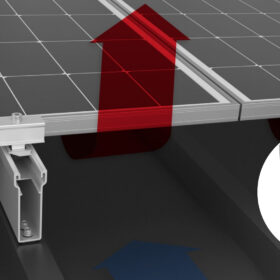
K2 Systems unveils elevated PV mounting solution for metal roofs
The K2 MultiRail High mounting system is a one-piece elevated solution with a height of 100 mm tailored to improve rear ventilation on metal roofs. K2 Systems says greater distance between modules and metal roof surface improves airflow and lowers module temperature, which can translate to higher annual energy yield.
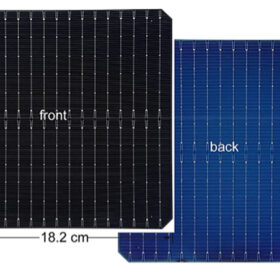
Discovery of passivating pinholes in TOPCon solar cells paves the way for higher efficiencies
DAS Solar and Hebei University have identified two types of pinholes in TOPCon solar cells: harmful recombinational pinholes, which lack oxygen and cause carrier recombination, and beneficial passivating pinholes, which retain oxygen to enable efficient tunneling while maintaining interface passivation. Their work shows that optimizing oxide layer formation, back-surface polishing, and polycrystalline silicon deposition can increase passivating pinholes, boosting device efficiency and guiding industrial cell design.
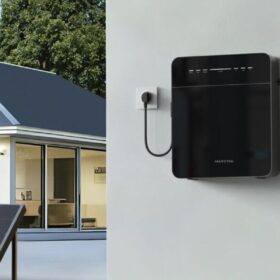
Marstek launches 2 kWh plug-in battery storage system
Marstek has unveiled a plug-in storage system with a two-kilowatt-hour capacity. The device plugs into a standard household socket and is designed to store solar power from balcony systems or draw in cheap electricity from dynamic pricing tariffs.
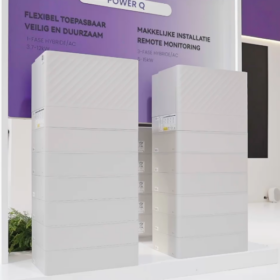
Fox ESS presents residential storage system line with 89.6% round-trip efficiency
The new series features single- and three-phase systems with scalable LFP battery integration. Designed for rapid whole-house backup and VPP applications, the new product delivers up to 89.6 % round-trip efficiency, according to the manufacturer.

DMEGC launches 475 W full-black solar module
The Chinese manufacturer said its new rooftop solar module offers 455–475 W power, 22.8–23.8% efficiency, 96-cell double-glass design, and IP68 protection.
