
Unlimited energy storage in Europe
Most studies of European 100% renewable energy overlook pumped-hydro energy storage (PHES), for the following, incorrect, reasons: there are few PHES sites; more dams on rivers are required; large areas of land are flooded; large amounts of water are required; there is a heavy environmental cost; and the capital cost of PHES is high. All these perceptions are wrong.
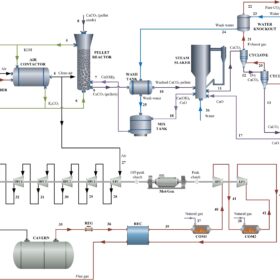
Combining liquid-based direct air capture with compressed air energy storage
Scientists in China have simulated a system that combines liquid-based direct air capture with diabatic compressed air energy storage, for the benefit of both processes. Exploring its economic feasibility, they found the system could achieve a levelized cost of energy of $0.53/kWh and a levelized cost of CO2 captured from air of $259/tCO2.
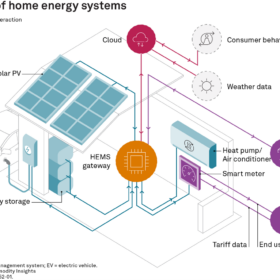
Energy management systems key to helping residential customers navigate increasingly complex energy markets
Home Energy Management Systems (HEMS) are emerging as essential tools, enabling consumers to navigate grid complexities, optimize energy usage, and contribute to a more resilient and low-carbon grid.
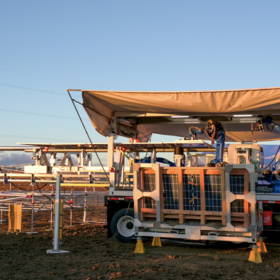
US startup offers portable factory for ground-mounted PV plants
Charge Robotic’s portable factory system assembles solar equipment including tracks, mounting brackets and panels on-site and then puts it into place via an automated robotic vehicle. The company’s first commercial deployments are scheduled for this year.
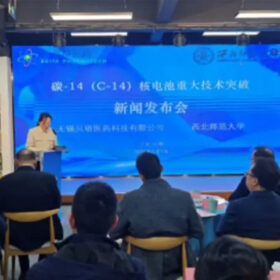
China unveils nuclear-powered battery with millennium-long lifespan
Beita Pharmatech and Northwest Normal University have develop a carbon-14 nuclear battery encased in silicon carbide, offering unprecedented longevity and application potential.
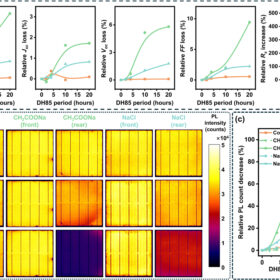
New research shows degradation mechanisms in rear side of TOPCon solar cells
Researchers from UNSW and Longi have found that the silicon nitride layers used in TOPCon cell rear-side are particularly prone to chemical degradation from sodium contaminants. This can lead to significant open-circuit voltage losses and reduce cell efficiency.
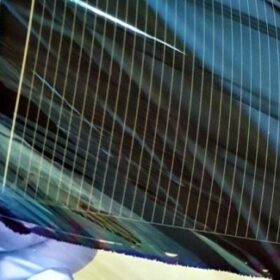
Dutch consortium seeks to reduce costs of hole transport layers for perovskite solar cells
Two Dutch manufacturers have teamed with TNO’s perovskite solar cell experts to integrate spatial atomic layer deposition equipment to produce ultra-thin, high-quality nickel-oxide hole transport layers in a roll-to-roll process. The team targeting production integration in mid-2027, with full-scale production by 2030.
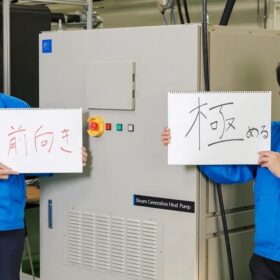
Fuji Electric prototyping 150 C steam-generating heat pump
Fuji Electric said the new heat pump system is currently in the first stage of prototyping, with commercial launch being scheduled for 2026. It is being conceived for recycling of heat energy from wastewater in industrial facilities.
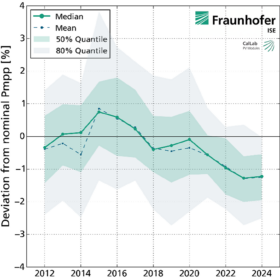
Fraunhofer ISE research finds solar module output ‘often overstated’
A longitudinal research project from the Fraunhofer Institute for Solar Energy Systems ISE reveals that since 2017, the institute has measured less power on average in a solar module than promised by the manufacturer.

Dutch startup develops sodium-ion battery tech for solar colocation
Dutch start-up develops sodium-ion battery tech for solar colocation
