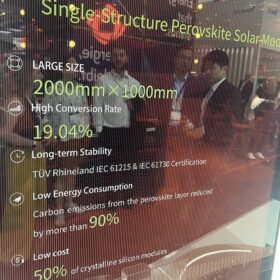
DNV shares technology performance level chart for perovskite solar modules
The technology performance level chart is designed to help perovskite module manufacturers develop technical bankability and highlight the economic viability of their technology.
Daytime charging of electric vehicles further expands adoption of photovoltaics
Photovoltaics continues adding capacity at a rapid pace, and 2024 was another record year for solar PV deployment. In the meantime, despite recent hurdles to widespread adoption in some countries, electric vehicle uptake grew 25% last year. Assuming a 10 kWh/day energy requirement for every new EV, the 17 million new EVs sold in 2024 would have added another 50-70 GW of new PV generation worldwide.

Could German PV energy communities participate in the balancing market?
The RWTH Aachen University has simulated 27 scenarios of energy communities participating in the balancing market in Germany and has found that the business model behind an energy community is only feasible if battery storage is available.
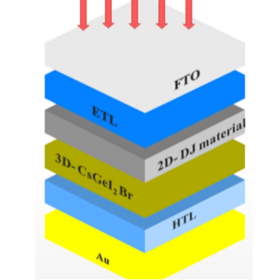
Indian scientists design 31.16%-efficient 2D-3D perovskite solar cell
Scientists in India have simulated a novel perovskite solar cell that combinies a Dion-Jacobson 2D layer with a 3D halide perovskite. The design showed improved stability compared to reference cells without the DJ-2D layer.
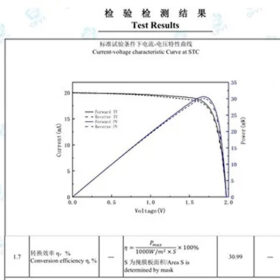
Risen claims 30.99% efficiency for perovskite-silicon tandem solar cell
The result was confirmed by China’s National Solar Photovoltaic Product Quality Supervision and Inspection Center. The tandem device is relying on a bottom cell based on a heterojunction design.
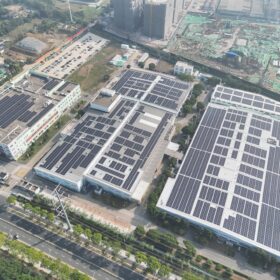
China’s SPIC offering copper-based heterojunction solar modules
The Chinese module maker is preparing to bring to the market 25.97%-efficient heterojunction solar cells based on copper metallization. The new products are based on ultra-narrow 9-micron busbars, vacuum-deposited copper interconnects and proprietary interface engineering.
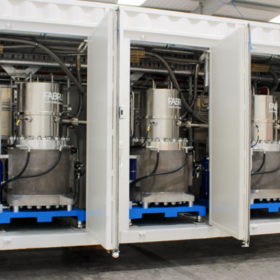
Airport-based green hydrogen test plant paves way for zero emissions aviation
Aotearoa-based green hydrogen solutions company Fabrum has opened an advanced liquid hydrogen test facility in partnership with Christchurch International Airport, believed to be the first at an airport that can provide hydrogen on demand.
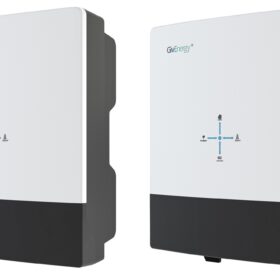
GivEnergy launches Gen 3 hybrid inverters for pairing with stackable storage
The new single phase hybrid range includes 8 kW and 10 kW models.
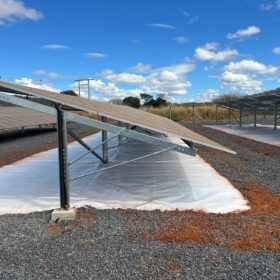
Brazilian plastics manufacturer offers reflective membrane for bifacial PV plants
Azul Pack has developed a new reflective membrane to increase albedo and energy yield in photovoltaic plants with bifacial modules. In a fixed structure plant located in Minas Gerais, the technology reportedly resulted in a 7% increase in energy at the inverter output.

New study shows reducing number of solar modules per string reduces risk of hotspots
Scientists in Indonesia have investigated early operational defects in a 24.9 MW solar PV system in Sumatra and have identified hotspot formation as the dominant defect. They also detected 282 cases of glass cracking, 350 cases of junction box failures and shading effects linked to module defects.
