
Greek startup launches direct PV water heating solution
Axinar has launched SolBox, a direct PV water heating system that powers electric resistance accumulators without thermal collectors. It’s designed for homes and businesses, offering real-time monitoring, MPPT optimization, and automatic grid backup.

CSIRO puts battery chemistries to test in tropical conditions
Researchers from Australia’s national science agency are working with Malaysian authorities to assess how different battery chemistries perform under tropical conditions, including high temperatures, humidity, and corrosion, and how these factors affect durability, safety, and cost effectiveness.
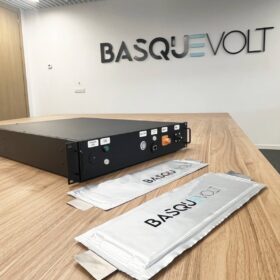
Iberdola-led project develops solid-state battery module for stationary storage
Basquevolt and Bcare have successfully developed and integrated the first solid-state cells into a module for stationary applications, accomplishing this within the Iberdrola-led ASTRA-CC project (2023–2025).

Solar modules under pressure: The growing risk of spontaneous glass breakage
Once considered isolated incidents, spontaneous glass breakages in solar modules are becoming more frequent, highlighting the limits of some manufacturing choices and the need for closer quality control.
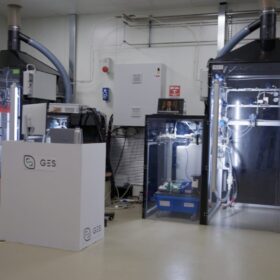
GES rolls out manganese-hydrogen battery with significant cost edge over lithium-ion
The Italian company said the manganese-hydrogen battery it has developed represents an advanced solution for long-duration energy storage. The technology enables energy to be stored for many hours or even days, overcoming the structural limitations of lithium-ion batteries.

The eyes and ears of the power grid
Sensors are an indispensable tool to inform utility managers of the state of the electricity grid and the occurrence of disruptions of any kind. The IEC provides the standards and conformity assessment that enable them to operate safely and efficiently.
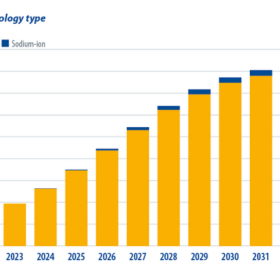
Why sodium-ion can’t yet challenge lithium-ion’s reign
A new generation of sodium-ion (Na-ion) battery cells has been launched as an alternative to the virtual monopoly of lithium-ion (Li-ion). Although the technology is unlikely to displace significant Li-ion market share, recent improvements make Na-ion a viable solution for certain niche applications, with potential for wider usage if cost becomes competitive.
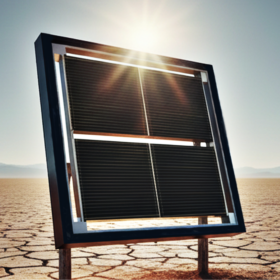
Researchers achieve record perovskite solar module stability under light, heat, and UV stress
An international research team has developed a new two-dimensional perovskite interlayer based on a co-crystal engineering strategy for more robust perovskite films. It demonstrated improved performance in small area perovskite solar cells and, in a 48 cm2 module, contributed to retain 95% of initial efficiency after 5,000 h.
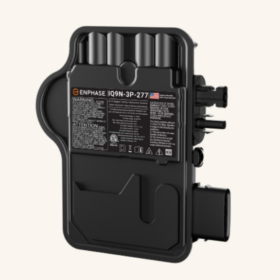
Enphase begins shipping GaN-based commercial microinverters
The new IQ9N-3P microinverter utilizes gallium nitride technology to deliver 427 VA of peak power and 97.5% efficiency for the 480 V three-phase commercial market.

Dutch long-duration energy storage project targets sub-€50/kWh costs with innovative technologies
The SLDBatt project brings together TRL 7 battery technologies – including molten sodium‑salt, saltwater acid–base flow, and hydrogen–iron flow batteries – to deliver an innovative and cost-effective long-duration energy storage solution.
