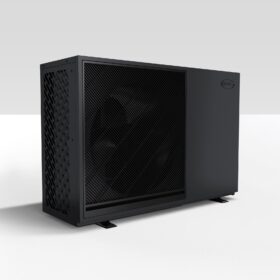
Grant launches air source heat pump for residential applications
The novel propane heat pump has a coefficient of performance of up to 4.9 and can reportedly achieve a flow temperature of up to 55 C.

Fronius debuts hybrid residential solar inverter
Designed for U.S. solar installations, the GEN24 Plus inverter enables users to connect their solar array to home energy storage.
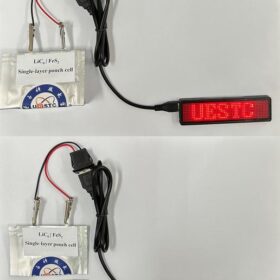
Researchers develop lithium-sulfur battery that can be cut, folded
By coating the iron sulfide cathodes in polymers, a research team was able to create transition-metal sulfide-based lithium batteries with stable cycling and high safety. After 300 cycles, a lithium carbide iron disulfide pouch cell retained 72.0% capacity with no capacity degradation after 100 cycles.

New tool optimizes ground works, PV tracker planning
Aplitop and Soltec have partnered to develop a computer-aided design (CAD) plugin application aimed at simplifying the planning process and reducing earth-moving operations, measurements, and the relocation of solar trackers in ground-mounted PV projects.
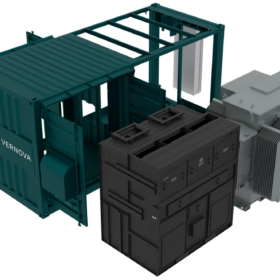
GE Vernova releases 2,000 V (DC) utility-scale inverter
GE Vernova has developed a 2,000 V (DC) utility-scale inverter, to be used in a North American pilot operation starting in early 2025. The inverter offers up to 6.0 MVA of output power.
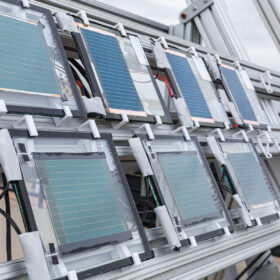
Thin-film tandem solar in the U.S.
Tandem solar-cell technology featuring silicon has been widely researched but materials such as perovskites, paired with established thin-film solar or with other perovskite cells, are pointing to a new development path.
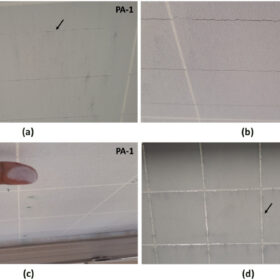
A closer look at backsheet degradation in desert enviromnents
A Qatari research group has analyzed the performance of polyethylene terephthalate backsheets in real outdoor testing conditions in desert areas and has identified the main causes that lead to degradation. These include prolonged exposure to high ultraviolet radiation, high operating temperature cycling, and relative humidity.

World now has five times more PV than nuclear power
Authors of the World Nuclear Industry Status Report 2024 the world had 408 operational reactors producing 367 GW in the middle of the year, which is significantly less than installed capacity predictions for solar by the end of the year and five time less the world’s cumulative PV capacity, which is now approaching 2 TW.

Dandelion unveils residential geothermal heat pump with coefficient of performance of 5.2
The novel heat pump can reportedly heat air to up to 49 C. Its full-load heating capacity is of up to 63,000 Btu/hour.

Madrid’s residential solar self-consumption rates hit 30% to 70%
Researchers in Spain have calculated the potential self-sufficiency of rooftop solar in eight districts of Madrid, Spain. They have found that single-family homes can achieve self-sufficiency rates of more than 70%, while urban areas with high-rise buildings reach 30%.
