
Agro Solar Europe unveils agrivoltaic mounting kit with organic materials
Agro Solar Europe has developed an agrivoltaic mounting structure made with organic materials, featuring a design that weighs 90% less than common steel structures. The Germany company has used raw materials such as flax, carbon, and wood fiber.
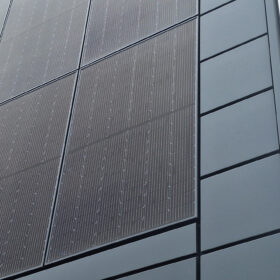
Fischer launches clamp-free fastening system for facade PV systems
Fischer has developed a clamp-free fastening system for facade PV systems, with a mounting solution that requires minimal gaps between modules. The company says it is simple to install and dismantle.

New model to calculate energy yield in east-west vertical bifacial PV plants
A Dutch research team has created a new approach to simulate the performance of vertical bifacial photovoltaic farms. The novel methodology considers design parameters and energy market conditions.
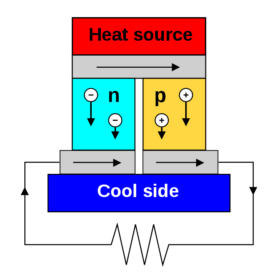
Hybridizing thermoelectric generators with photovoltaic ground-source heat pumps
Researchers in South Korea have analyzed the feasibility of using thermoelectric generators in combination with residential solar-assisted ground-source heat pumps and have found that the thermoelectric devices may act as a suitable power source for data loggers and other sensors in a building system.
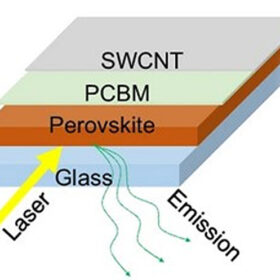
Bifacial PV cell based on single-walled carbon nanotubes achieves 17.1% efficiency
Conceived to be produced at substantially lower costs than conventional perovskite solar cells based on metal contacts, the new cell is reportedly able to achieve a bifaciality factor of over 80% and a power generation density exceeding 36%.
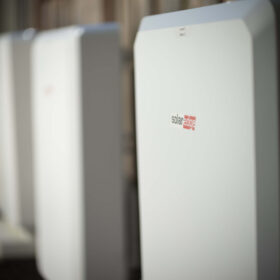
SolarEdge offers upgrade to oversize system, add backup power
SolarEdge’s Re-Energize program includes data card upgrades to connect smart home devices and home battery backup.
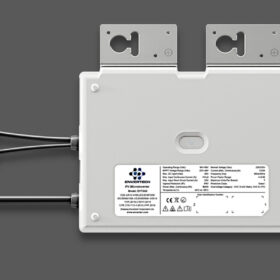
Envertech launches 800 W microinverter for residential, balcony PV
Envertech says its new microinverter has a maximum efficiency of 96.8%. The short-circuit current of the new product is 25 A and the voltage output is 220 V.

Sinovoltaics tracks emerging PV manufacturing hubs in Europe, North America
Sinovoltaics is studying the changes in the supply chains in manufacturing hubs in Europe and North America to determine site capacity, current and planned, for dozens of manufacturers. The results are being published in free reports.
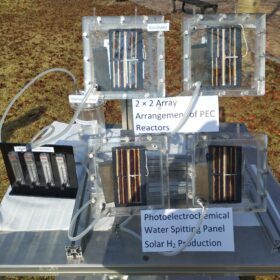
PV-driven water splitting system with solar-to-hydrogen efficiency of 9.8%
Scientists in Korea have built a green hydrogen system prototype that embeds a PV generation unit based on photoanodes made of perosvksite solar cells. The device purportedly achieved a solar-to-hydrogen efficiency of 9.8% for a device with a size of 0.25 cm2, and 8.5% for a system measuring 123.2 cm2.
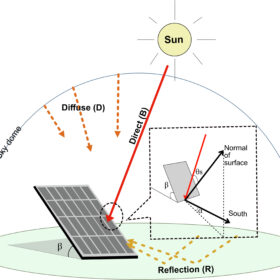
New method to find right tilt angle for PV systems located in high-latitude, cold regions
A group of researchers from Sweden has developed a new model to find the optimal tilt angle in PV installations located at high latitudes. The new approach takes into account, among other factors, the effect of transmittance change based on snow.
