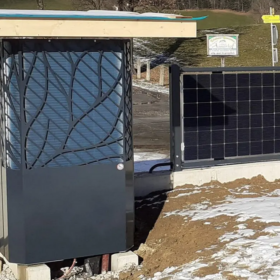
Austrian manufacturer offers modular air-to-water propane heat pumps
Lambda Wärmepumpen GmbH said its Eureka heat pump series uses a patented fluid mechanics system that reportedly improves heat transfer by four to six times while maintaining a temperature difference of just 3 K between the air and the refrigerant. Its seasonal coefficient of performance ranges from 4.50 to 6.10.
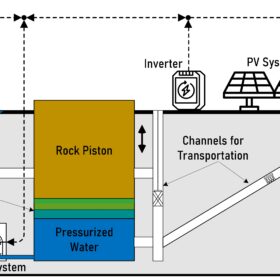
PV-driven hydraulic hydro storage may hit $0.022/kWh LCOE in the U.S.
An international study has demonstrated that utility-scale solar PV paired with hydraulic hydro storage (HHS) could reach an LCOE as low as $0.022/kWh in select U.S. regions. The system could provide GWh-scale, cost-competitive, and highly reliable long-duration storage, capable of powering large commercial districts with minimal environmental impact.
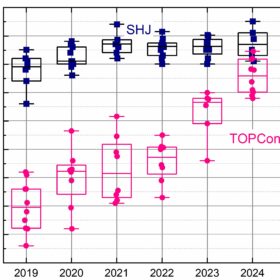
Heterojunction vs. TOPCon in perovskite-silicon tandem
Scientists in Australia claim that TOPCon cells are rapidly closing the open-circuit voltage gap with heterojunction counterparts, now under 10 mV, while offering greater wafer tolerance and high industrial scalability. Despite slightly lower efficiency, TOPCon-based perovskite/silicon tandems can achieve a levelized cost of energy comparable to heterojunction-based tandems due to reduced fabrication costs, according to the researchers.
TBEA unveils grid-forming converter for large-scale storage, renewables
Chinese power transformer manufacturer TBEA introduced a grid-forming string power conversion system (PCS) for utility-scale storage, renewable energy base projects, and weak-grid applications. The TE435/392K-HV-BL high-power converter focuses on improving power density and grid support. According to TBEA, its fully integrated liquid-cooling design increases volumetric power density by 78% and gravimetric power density by 32% […]
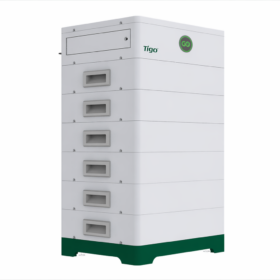
Tigo releases modular battery for residential PV
The US manufacturer has launched a modular residential battery for Europe, scalable from 7.3 kWh to 47.9 kWh with LFP chemistry and IP65 protection. The system offers up to 23.3 kW nominal power, over 6,000 cycles, and a depth of discharge of 90%.
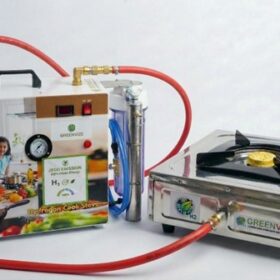
Indian startup launches plug-and-play hydrogen cooking unit
Indian clean-tech startup Greenvize has launched a compact hydrogen-based cooking system designed for residential and commercial kitchens. The system integrates a proton exchange membrane (PEM) electrolyser directly into a cooking unit, enabling on-site hydrogen generation from water without the need for storage or distribution infrastructure.

Conductive smart hydrogels as battery electrolytes: Promising for lithium, sodium, and zinc-ion chemistries
Hydrogels offer promise in batteries as an electrolyte, including lithium and sodium chemistries, due to being inherently more safe.
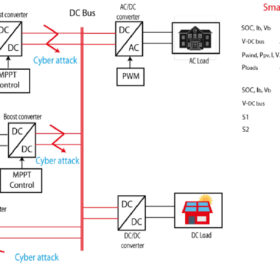
All emerging cyber threats targeting power infrastructure at a glance
Researchers in Moroco analyzed cybersecurity challenges in smart grids, highlighting AI-driven detection and defense strategies against threats like distributed denial-of-service, false data injection replay, and IoT-based attacks. They recommend multi-layered protections, real-time anomaly detection, secure IoT devices, and staff training to enhance resilience and safeguard power system operations.
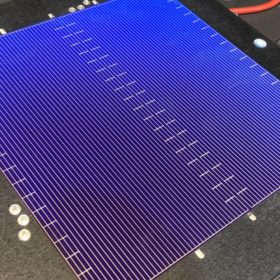
The impact of annealing on copper-plated heterojunction solar cells
A UNSW-led team found that annealing conditions significantly affect stress, strain, and microstructure in copper-plated heterojunction solar cell contacts, with fast annealing increasing microstrain in both copper and indium tin oxide.

New Time targets large-scale perovskite production in Italy
New Time has outlined a four-year roadmap to industrialize perovskite solar cells in Italy, with pilot production planned within three years and full-scale output to follow.
