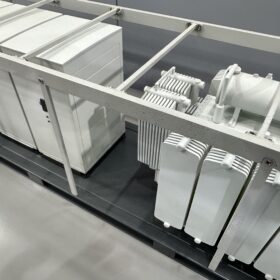
The Hydrogen Stream: Atome secures $420 million debt for Paraguay plant
Atome says it has secured a $420 million debt package for a $650 million low-carbon fertilizer project in Paraguay producing 260,000 metric tons (MT) per year, while Asahi Kasei says it has begun installing a 1 MW-class electrolyzer at Finland’s first commercial hydrogen refueling station.
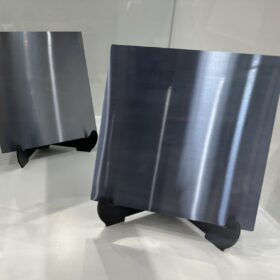
Chinese PV Industry Brief: Wafer prices fall on weak demand
The China Nonferrous Metals Industry Association (CNMIA) says polysilicon and wafer prices continued to fall this week, with n-type re-feed and dense polysilicon down 6.39% and 6.42% to an average of CNY 45,200/ton ($6,240).

Sigenergy unveils 166 kW inverter for C&I solar
Sigenergy has launched a 166 kW IP66-rated inverter for C&I solar and storage offering nine MPPT trackers and flexible AC/DC connections. The launch coincided with the opening of its Nantong Smart Energy Center, a 136,000 m² facility for R&D, manufacturing, and global delivery.

‘Even when I sensed bias, I focused on doing my job’
This week Women in Solar+ Europe gives voice to Sabina Blitek, General Counsel at Netherlands’ R.Power Renewables. She says women in male-dominated industries, like energy and finance, can overcome bias by consistently demonstrating competence, believing in their own potential, and leading by example.

Cold, clear skies boost northeastern Europe’s solar while storms dim the west
In a new weekly update for pv magazine, Solcast, a DNV company, reports that February saw a sharp divide in Europe’s solar conditions. Northeastern regions experienced clear, cold weather with irradiance 20% above average, while western and southern Europe endured persistent storms and widespread irradiance deficits.
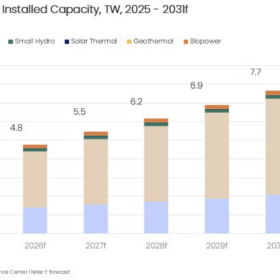
Global solar capacity to reach 6 TW by 2031, says GlobalData
GlobalData says global renewable capacity will more than double to 8.4 TW by 2031, with PV reaching nearly 6 TW, a 13% compound annual growth rate from 2025 levels of 4.1 TW.

Bahrain reveals qualified bidders for 100 MW BAJ Solar IPP project
The Bilaj Al Jazayer Independent Power Project will be developed under a public-private partnership on a build-own-operate basis.
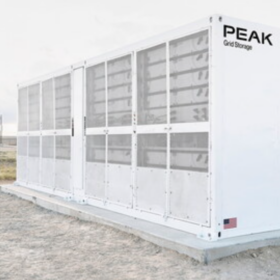
RWE, Peak Energy to deploy first sodium-ion battery in US grid
Peak Energy says it will deploy the first sodium-ion battery in the Midcontinent Independent System Operator (MISO) service area with RWE Americas in eastern Wisconsin, using passively cooled grid-scale storage that cuts auxiliary power use by 90% and lowers lifetime storage costs by $70/kWh.
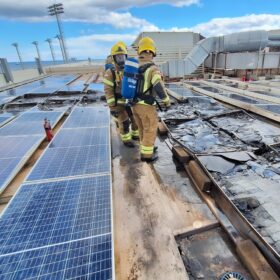
Fire hits PV-equipped sport complex in Gibraltar
Fire caused by an electrical fault from an overheated arcing cable hit the solar panels at Europa Point Stadium in Gibraltar. Firefighters contained and extinguished the blaze within 20 minutes.

Increased spacing between solar module rows boosts agrivoltaics viability
U.S. researchers developed a framework showing that wider spacing between solar PV rows can make agrivoltaic systems economically viable for large-scale mechanized farming. Their simulations in Colorado demonstrated that optimized row spacing maintains crop production while improving combined agricultural and energy revenues.
